

Model Train Guides
Atlas Trains: Choose Scale, Track and Product Line
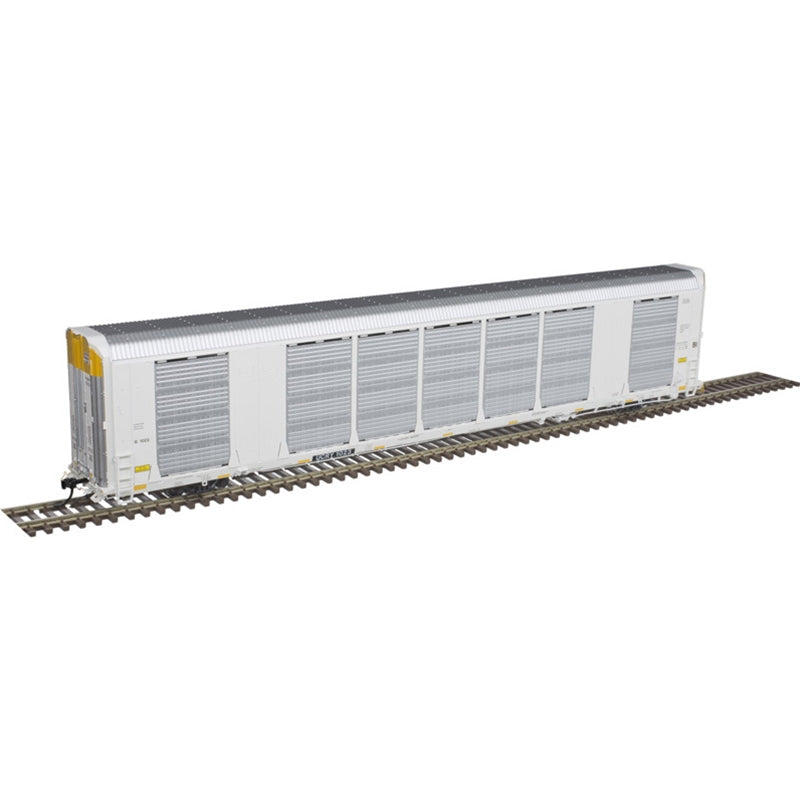
“Atlas trains” can refer to locomotives, freight cars, passenger cars, track, structures and accessories in more than one scale. The brand name alone is not enough to determine whether an item fits your railroad. Start with the exact item number, scale and product category.
This guide is designed to help shoppers read Atlas listings without mixing rolling stock, track systems or scales.
Identify the product category
First decide what the listing actually represents:
- a powered locomotive;
- an unpowered freight or passenger car;
- a train-set component or multipack;
- a section of track or turnout;
- a structure, vehicle or scenery accessory;
- a replacement or detail part.
A detailed freight car is not a complete train, and a turnout is not useful until it matches the rest of the track system.
Confirm the scale
Atlas products are sold in different scales. Keep HO, N and O-scale families separate. The model’s couplers, wheels, track gauge, dimensions and visual proportions depend on its scale.
The featured example, the Atlas HO Gunderson Multi-Max Auto Rack, Utah Central Railway 1023, is an HO freight car. Its product type and scale should be recorded together; “Atlas auto rack” alone is too broad.
Use the exact item number
Railroad name, road number, paint scheme and production details can vary between releases that look similar in search results. Record the Atlas item number along with the title. When buying a matching pair or replacing a missing car, compare both fields.
Packaging can also change while the model identity remains tied to the item number. Keep a photo of the box label in your collection record.
Separate compatibility questions
Compatibility is not one yes-or-no answer. Check each layer:
- Scale and gauge: Does it physically fit the track?
- Curve requirements: Can the length and truck swing handle your curves?
- Couplers: Will it connect to the rest of the train?
- Electrical system: For locomotives, is control conventional DC, DCC-ready, DCC-equipped or another configuration?
- Clearance: Will tall or long cars pass structures, tunnels and platforms?
Long equipment such as auto racks deserves particular attention to curve radius, coupler swing and side clearance.
Match track by system, not appearance
If you are buying Atlas track, identify the precise track family, rail profile and connection method. Two pieces can share the same scale and still differ in rail height, roadbed or joiner design. Plan transitions deliberately rather than forcing mismatched sections together.
Our first roster guide helps choose locomotives and cars for one scene, while the listing guide explains how to separate scale, controls and box contents.
Build a coherent roster
Choose a railroad, place, era or operating purpose before buying several attractive cars. A modern auto rack belongs naturally in a different train than a short early freight car. You can collect broadly, but a defined roster makes it easier to select locomotives, couplers, scenery and minimum curves.
Inspect a model when it arrives
Before running, check that trucks pivot, wheels roll, couplers return to center and small details remain attached. Compare the road number and paint scheme with the listing. Do not force a stiff part; inspect the instructions and packaging first.
Our new model train inspection guide provides a controlled first-run process.
Atlas trains checklist
- Record the exact Atlas item number.
- Confirm scale and product category.
- Verify railroad, road number and paint scheme.
- Check minimum curve and clearance needs.
- Confirm coupler and electrical compatibility.
- Match track additions to the exact track family.
- Inspect the model before its first run.
Frequently asked questions
Are all Atlas trains compatible with one another?
No. Atlas makes products in different scales and categories. Compatibility must be checked for scale, track, couplers and control.
Is an Atlas freight car powered?
Normally a freight car is unpowered and must be pulled by a compatible locomotive. Read the exact listing.
Why does a long Atlas car derail on tight curves?
The curve may be below the model’s practical requirement, or coupler and truck movement may be restricted. Check the exact car, track geometry and clearances.

