

News
Buying Custom Hot Wheels: Photos, Finish, Wheels & Contents
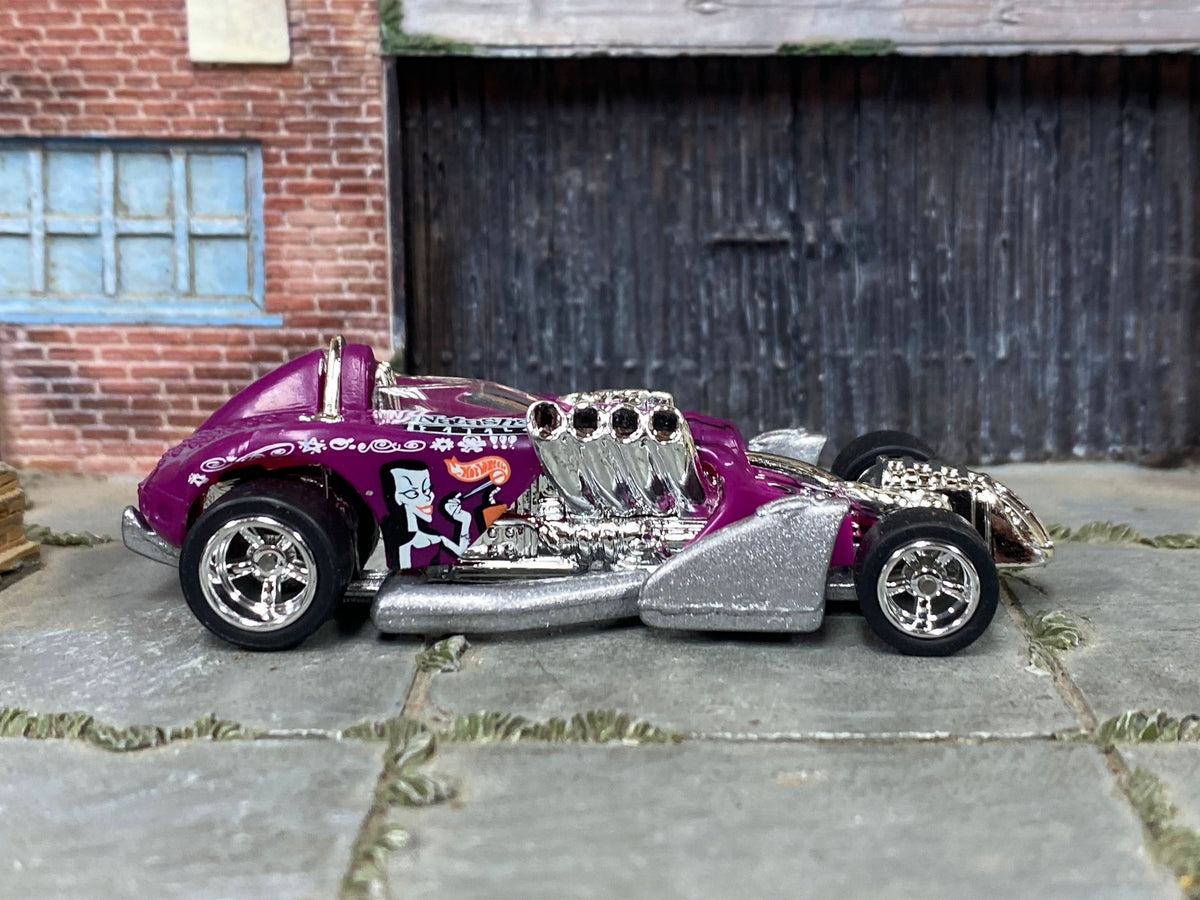
Buy a custom Hot Wheels as the exact finished build shown—not as a generic promise about a casting. The useful evidence is the product gallery, the disclosed modifications, the included items and the visible condition.
Start with a seven-point listing check
- Confirm the exact casting and vehicle represented.
- Read whether the body is original, stripped, repainted or otherwise modified.
- Identify the installed wheels, tires and axles.
- Inspect stance and clearance from several angles.
- Check the base and fasteners for the stated assembly method.
- Confirm whether packaging, a case or separate parts are included.
- Use the individual listing for availability and checkout terms.
Separate what you can see from what is stated
Make three short notes for the car you are considering: visible in the gallery, stated in the description, and still unconfirmed. A side view can show the graphics and wheel faces; it cannot show the whole underside, demonstrate free rolling or prove that a display prop comes in the parcel. Read the contents statement separately from the scene around the car.
If the base, an axle end or a paint edge matters to your decision and is not visible, ask for that detail before paying. Keep the product title or link with the question so the answer refers to the same finished build.
The purple Saltflat Racer custom is a completed loose car with chrome mag wheels and rubber tires. Its description explicitly excludes retail packaging, a display case and a parts kit. Those exclusions are useful buying information even when the photograph shows only the car. Check the live listing for the current price, availability and checkout terms.

Separate body finish from wheel work
A wheel-swap custom can retain its factory body finish, while another build may be fully repainted. Ask which work was performed instead of assuming every custom received the same process.
The satin-red 1955 Chevy Gasser combines a disclosed satin-red finish with gold five-spoke wheels and rubber tires. Those details belong to that exact completed car. The number 55 and flame graphics are visible in this photograph. The finish label does not identify every painting step; ask what work was done if retaining the original finish matters to you.

Inspect wheel fit in the assembled car
Look for centered axles, even stance and tire clearance, and ask about free rotation. A large wheel can look dramatic in a side photograph yet rub once the base, interior and body are fully assembled. If rolling behavior matters, ask before ordering when the listing does not state it. Rubber tires and an attractive stance do not establish track performance.
The Mercedes-AMG GT3 custom identifies BBS-style wheels and rubber tires as installed parts of the completed car—not a separate parts set. The yellow body, black racing graphics and number 1 identify the photographed example. The listing uses 2016 for the represented vehicle, not as a verified Hot Wheels release year.

Finished custom, DIY kit or monthly club?
| Route | Best when | Confirm |
|---|---|---|
| Individual finished custom | You want the exact photographed car | Condition, modifications and included items |
| Individual DIY kit | You want to choose the finish and assemble it | Donor pieces and separately required wheels or supplies |
| Monthly custom club | You accept a changing selected build | Contents, cutoff, renewal, shipping and cancellation terms |
Browse finished custom Hot Wheels, individual DIY kits, or the current club collection. Do not transfer promises from one format to another.
Keep originality and value claims disciplined
Replacement wheels or paint do not turn a donor into a factory premium, chase or rare variation. A custom can be desirable for its craftsmanship and design without being presented as an untouched collectible. Compare custom work with similarly described custom work—not an exceptional sale for an original factory release.
Questions before buying a finished custom
Does a completed custom include a case or spare wheels?
Only when the offer says so. The purple Saltflat Racer example specifies one loose completed car and excludes retail packaging, a display case and a parts kit. Do not transfer that exact package to another listing; read each contents statement.
How can I tell whether the body was repainted?
Look for a clear statement of the work performed. A finish name or attractive photograph does not document the whole process. If original paint matters, ask which body finish and graphics were retained and which were changed.
Do rubber tires mean it will roll well on my track?
No performance result follows from tire material alone. Ask about rotation and clearance on the assembled car, and describe your intended use. A still image cannot demonstrate rolling behavior.
Is the model year the Hot Wheels release year?
Not automatically. The Gasser and AMG listings use 1955 and 2016 for their represented vehicles. Neither number alone establishes when Mattel released the toy. Keep the vehicle identity and the toy release separate.
What if the photos and description disagree?
Pause and identify the exact discrepancy: color, wheel style, quantity, packaging or whether the offer is a car or parts. Ask for confirmation against that product’s title or link. Do not resolve a conflict by assuming the more generous interpretation.
Use the actual listing as the final authority
Open every image, read the current description and resolve any missing detail before checkout. The collector guide hub can help with release identification; the product page controls the car, contents and availability you are buying.
For an unresolved detail, ask about the exact product before ordering. You can also use the Hobby Learning Center to explore the building work behind a modification.

