

News
Spectraflame-Inspired Customs: Finish Planning & Disclosure
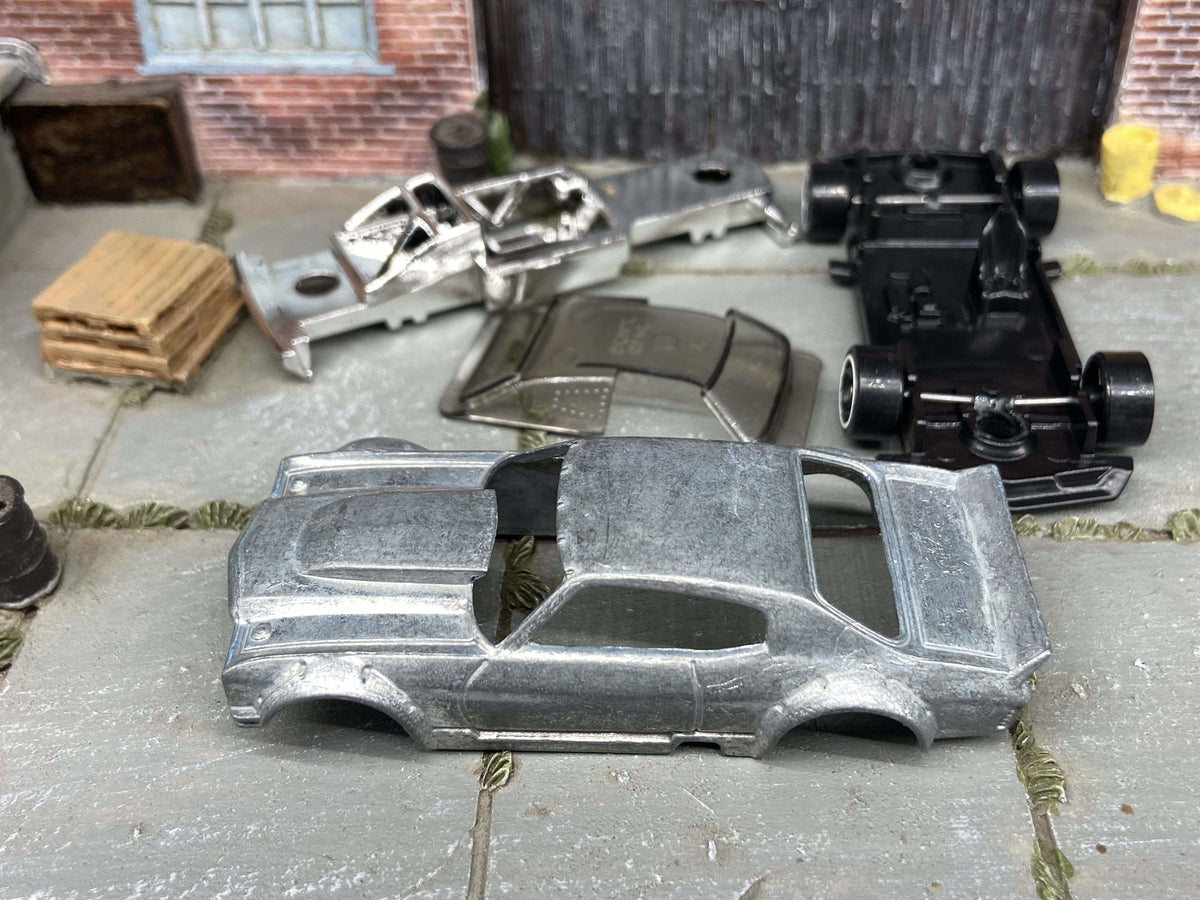
Opening photo: the prepared Chevelle DIY kit with its body, window insert, interior and wheeled base separated. It shows a starting project, not a completed paint finish.
A Spectraflame-inspired custom is a new finish, not proof of an original factory coating. Treat the look as a design goal, choose a suitable donor, and record what was changed. That distinction protects vintage cars from unnecessary alteration and helps future buyers understand exactly what they are seeing.
For factory-release identification, use the Spectraflame collector guide. This article is about planning an aftermarket build and describing it honestly.
Decide whether to preserve, restore or customize
Start by identifying the casting, base, wheels and visible finish. An original car with wear can still be an original example; stripping it replaces that history with a modern project. If preservation matters, photograph every side and stop before making irreversible changes.
For a creative build, select a common donor or a prepared project such as the 1970 Chevelle SS Race DIY kit. Its current listing identifies a stripped body ready for paint and says custom wheels are sold separately. Confirm the pieces you receive before planning the finish.

Choose a starting point before choosing a color
| Starting point | Work you choose | Check before committing |
|---|---|---|
| Original painted car | Keep the existing finish when originality is the reason you collect it. | Identify and photograph it before any stripping or repaint. Wear alone is not a reason to erase original paint. |
| Prepared DIY donor | Choose the new paint, details and assembly sequence yourself. | Confirm the supplied components, finishing supplies and separately sold wheel upgrades. |
| Finished custom | Choose an already completed design for your display. | Inspect the exact photos and modification description. Do not assume its paint is factory original. |
Test the complete finish system
Surface preparation, color, clear protection and curing must work together on the actual material. Follow each coating maker’s safety and compatibility instructions, and test on a separate sample before treating the diecast body. Do not assume one solvent, mixing ratio or cure schedule applies to every product.
Keep a labeled test piece with the product names, order of application and date. It gives you a real reference for color and reflectivity instead of relying on a screen photograph.
Make the test piece useful after the paint dries
Write down the result you want before buying materials: a reflective colored surface, an opaque color or a softer satin appearance. A transparent color layer depends on what is underneath it; it does not hide every surface mark. Choose a coating system intended for the substrate you will actually use.
- Starting surface: record the sample material and preparation. A result on a different material does not establish adhesion on the car.
- Complete system: name every planned layer, including any primer and protective clear. Follow the specific instructions for the combination, rather than mixing products because their color names sound compatible.
- Application record: note the conditions and dates, and keep the sample until the maker’s required curing stage. Dry to the touch does not automatically mean ready for masking or assembly.
- Viewing check: inspect the sample under the light you use for your display. Compare color, reflections and visible surface marks before deciding whether to paint the body.
If the sample does not meet your goal, revise and test the plan before committing the donor. Read the product labels and safety data sheets for the required ventilation, eye protection and respiratory protection. Choose a finished custom if you cannot provide the workspace the selected products require.
Use finished customs as design references—not authenticity references
The yellow BADMAN 1955 Chevy Gasser is a completed custom with disclosed yellow paint, graphics and rubber-tire drag slicks. Its product identity is the finished aftermarket build shown, not an untouched factory colorway.

Plan wheels only after measuring the donor
A reflective body finish does not create wheel clearance. Measure the installed tire diameter, width, inner spacing and axle arrangement at both ends. Dry-fit the base, interior and body together, then verify that each wheel rotates without rubbing.
Browse the wheel-and-tire collection after recording those measurements. Scale and a nominal diameter alone are not a universal-fit guarantee.
Disclose the finished work clearly
- State that the body was stripped, repainted or restored.
- List replacement wheels, tires, axles, decals and other changed parts.
- Show the top, both sides, front, rear and base.
- Do not use “original” for a recreated finish.
- Keep condition and craftsmanship separate from rarity or value.
Compare a satin-finish alternative
The Satin Custom Club illustrates another modern hand-painted category. Its monthly colors, castings and wheels vary; it is not a factory-finish authentication reference.
The current club includes one finished 1:64 real-world casting painted in satin, custom rubber tires and new axles. A display case is not included. Choose it if a changing finished custom suits your collection; specific makes, models and colors cannot be requested or guaranteed. Read the current subscription and shipping terms before joining.

Questions before painting a Spectraflame-inspired custom
Should I strip a worn vintage car for this look?
Identify it and decide whether you want to preserve its original finish first. If the appeal is factory history, repainting changes the feature you are collecting. A common donor or prepared DIY body can give you room to experiment while leaving that example intact.
Can I put any transparent color over a shiny bare body?
No. A reflective surface is a visual starting point, not proof that a coating will adhere or that the layers are compatible. Use the selected manufacturer’s substrate preparation and complete-system instructions, then test a separate comparable sample.
Is dry-to-the-touch paint ready for final assembly?
Not necessarily. Follow the product’s required curing and handling instructions for the next operation. Do not use a universal waiting time or judge readiness only by touching the surface.
Does the Chevelle DIY kit include custom wheels?
The current listing says custom wheels are sold separately. The photo of kit components does not change that offer. Check the supplied parts, measure the actual donor and test the wheel fit before final paint and assembly.
Can the yellow BADMAN or Satin Club prove a factory Spectraflame finish?
No. They are examples of modern custom work with their own disclosed finishes. Their paint, graphics and wheel choices can help you plan a display, but they do not authenticate another car or establish a factory paint formula.
What should I keep with a completed repaint?
Keep the before-and-after photos, finish-system notes and a list of replaced components. Describe it as a modern custom repaint where that is what you made. Record any unknown history as unknown rather than filling the gap with an originality or value claim.
Choose the project route that fits your goal
Use individual DIY kits when you want to perform the work, or browse finished custom Hot Wheels when you want a completed car. In either case, the listing and modification record—not a familiar color name—define what the car is.

