

News
Spectraflame Paint: Hot Wheels History, Finishes & Buying Guide
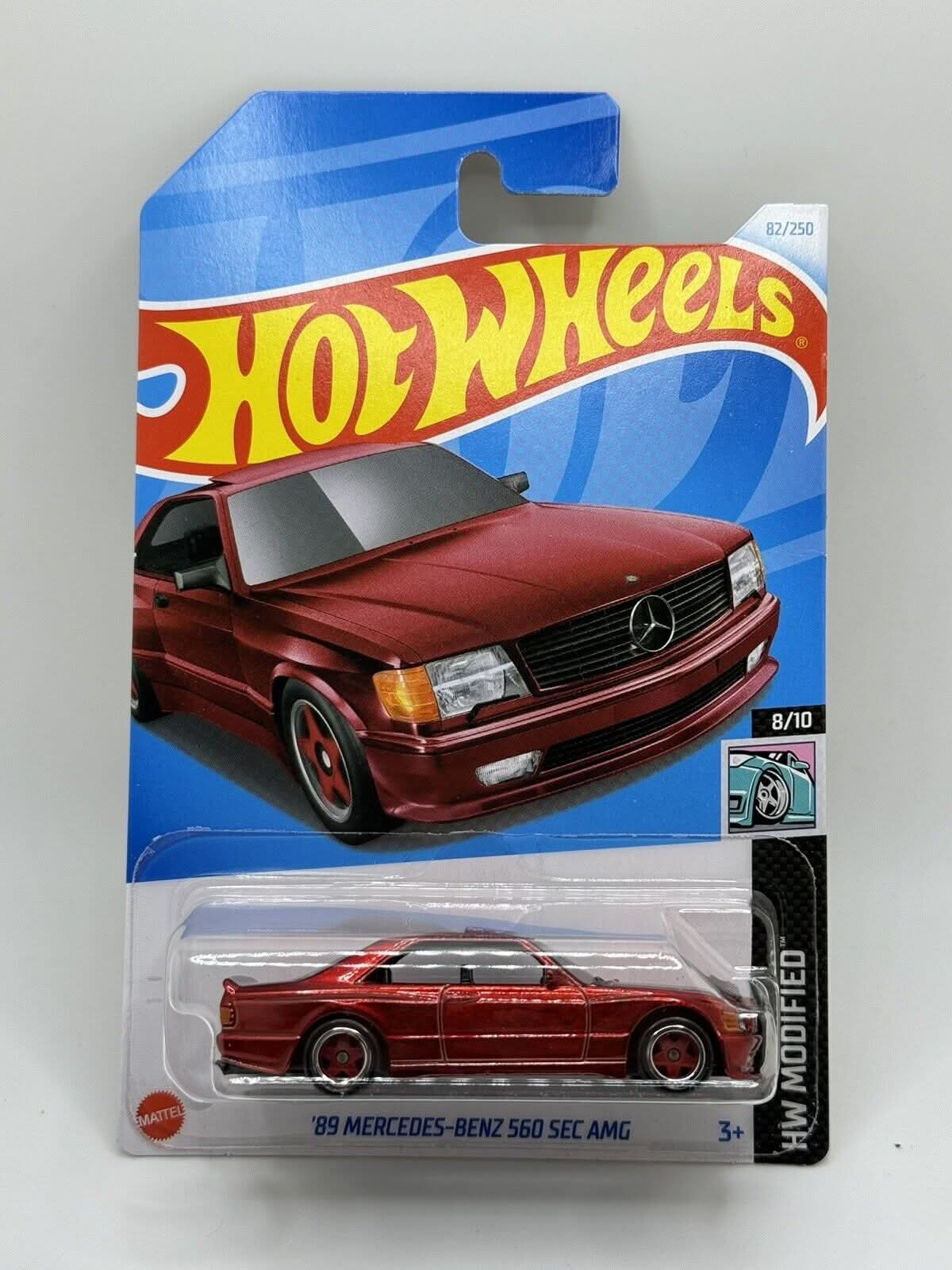
Spectraflame gives a Hot Wheels car a luminous colored finish, but the name alone does not tell you its age, rarity or originality. Decide first whether you want an original vintage car, a specific modern factory release or a custom with a finish you enjoy. Those are different purchases, even when their colors look similar.
The dark-red Mercedes pictured here is a modern Super Treasure Hunt example. Its packaging and release identity matter just as much as its shine. A bright repaint can be an appealing custom, while an older car with worn original paint may suit a collection built around factory condition.
How Spectraflame became part of Hot Wheels
When Hot Wheels launched in 1968, Spectraflame was one of its distinctive finishes. Mattel’s account of the original Custom Camaro describes a tinted coating over a shiny base; the small cars used polished diecast metal beneath the color. That relationship between the surface underneath and the colored layer helps explain the finish’s depth.
The name also belongs to later collector releases. Mattel revived Spectraflame for the Red Line Club’s 2002 launch, and its official 2024 Super Treasure Hunt set lists Spectraflame paint on the included cars. A modern Spectraflame car therefore does not need to be a vintage Redline, and a vintage-looking custom does not become an original release through paint alone.
Keep the finish description tied to the particular release. “Shiny red” describes an appearance; “2024 Super Treasure Hunt ’89 Mercedes-Benz 560 SEC AMG” identifies a car you can compare with its correct decoration, wheels and packaging.
Choose the kind of finish you want to collect
| Your goal | Useful comparison | What changes the decision |
|---|---|---|
| Preserve vintage factory condition | The same casting and release in comparable original condition. | Paint wear, exposed metal, possible touch-ups and the condition of the rest of the car. |
| Buy a modern factory Spectraflame release | The exact series, year, casting, decoration and wheel combination. | Whether the offered car matches that release and whether its packaging suits your collection. |
| Choose or build a custom | The completed appearance, disclosed work and included parts. | The finish, graphics and stance you want, rather than an unsupported claim of factory rarity. |
For example, two red cars are not useful price comparisons if one is a carded Super Treasure Hunt and the other is a repainted loose car. Even two examples of the same vintage release can have very different paint loss or repairs. Compare like with like before drawing a conclusion from an asking price.
Three store examples show different finish choices
Factory example: ’89 Mercedes-Benz 560 SEC AMG Super Treasure Hunt

This is one carded 2024 Super Treasure Hunt Mercedes. Mattel includes this casting in its 2024 Super Treasure Hunt set, whose cars have Spectraflame paint and Real Riders wheels. The MM listing is for the individual car shown, not that complete set. Choose it for this identified modern release, and inspect the offered card and blister rather than assuming a condition grade.
Custom example: yellow BADMAN ’55 Chevy Gasser

This completed custom has yellow paint, BADMAN Racing graphics and Goodyear drag slicks; its listing includes a display case. It is a useful choice for a bold drag-car display. Treat those stated custom features as the offer: yellow paint, lettering and an exposed engine do not establish a factory Spectraflame release.
Custom alternative: satin-red ’55 Chevy Gasser

The listing describes this finished custom as satin red with gold five-spoke wheels and rubber tires. Its flame graphics and wheel color are central to the look. Choose it when that complete design suits your display, rather than treating “red” as a substitute for an exact paint or release description.
Read the condition before deciding to improve it
Look at broad panels as well as edges, roof lines and raised details. Ask for clear views if glare hides an area that matters to you. Chips, uneven gloss, paint on parts that should be separate and a finish inconsistent with the rest of the car are reasons to investigate further; none is a reliable verdict from one photograph.
Base markings, body details, wheels and packaging help narrow the identity, but a base copyright date alone does not date the particular release. Replaced wheels or a repaint may also alter a car whose casting is otherwise correct. Describe an altered car honestly and judge it according to the kind of collection you want.
If original paint is the appeal, preservation starts with leaving it intact. Do not apply a bare-metal polishing method to a painted body simply to make it brighter. Read the care guide for older Hot Wheels and Matchbox before choosing a cleaning treatment, especially when paint is loose or the surface is unfamiliar.
Plan a custom finish around the actual project
For a repaint, start with a car you are comfortable altering or a prepared body intended for customization. The donor-selection guide helps you weigh body condition, construction and the features you want to keep. A prepared kit can change the starting work, but its exact contents still determine what you need to supply.
Set the body, wheel and detail plan before final paint. A transparent-color effect makes the underlying surface part of the appearance; an opaque color and a satin finish lead to different design choices. Test your chosen coating system on a comparable sample, follow the manufacturer’s surface preparation, ventilation and curing directions, and check that the layers are compatible. There is no universal paint recipe that turns a custom into an authenticated factory Spectraflame release.
Browse prepared DIY kits if you want to create your own finish. Choose a kit for its stated body and included components, then buy the finishing materials your particular coating system requires.
Questions collectors ask about Spectraflame
Does Spectraflame always mean an original Redline?
No. The finish name appears on modern Mattel collector releases too. Establish the specific car and release before deciding which era or collection it belongs in.
Can a photograph prove the paint is original?
A photograph can show color, visible wear and details worth checking. Lighting and camera exposure can change how a surface looks, and an attractive finish alone cannot establish its history. Ask for the views needed to assess the exact car.
Is every bright metallic or candy-colored Hot Wheels Spectraflame?
No. Similar-looking finishes can have different factory or custom descriptions. Use the documented finish of the exact release instead of assigning the name from shine alone.
Does a particular color automatically make a car valuable?
No. The release, originality, condition and comparable transactions matter together. A color claim without an identified variation does not establish rarity or a reliable value.
Should a worn original be repainted?
That depends on your goal. Repainting changes original condition. Keep a worn finish when that history is what you collect; choose a suitable project car when you want the freedom to create a new appearance.
For an identified factory release, browse carded Hot Wheels and Matchbox. For an already modified display car, compare finished customs by their actual decoration and parts. Continue with the collector guides for identification and condition, or the Hobby Learning Center for project planning. If a listing leaves a specific finish or condition question unanswered, ask Muncle Mikes about that item before choosing it.

