

News
Do Old Toy Cars Weigh More? Compare Generations Fairly
A heavier old car is an observation, not an industry average.
Your older model may weigh more than a newer one. That comparison is meaningful only when the actual cars, dimensions, condition and measurement method are recorded. It does not establish that every modern toy uses less material.
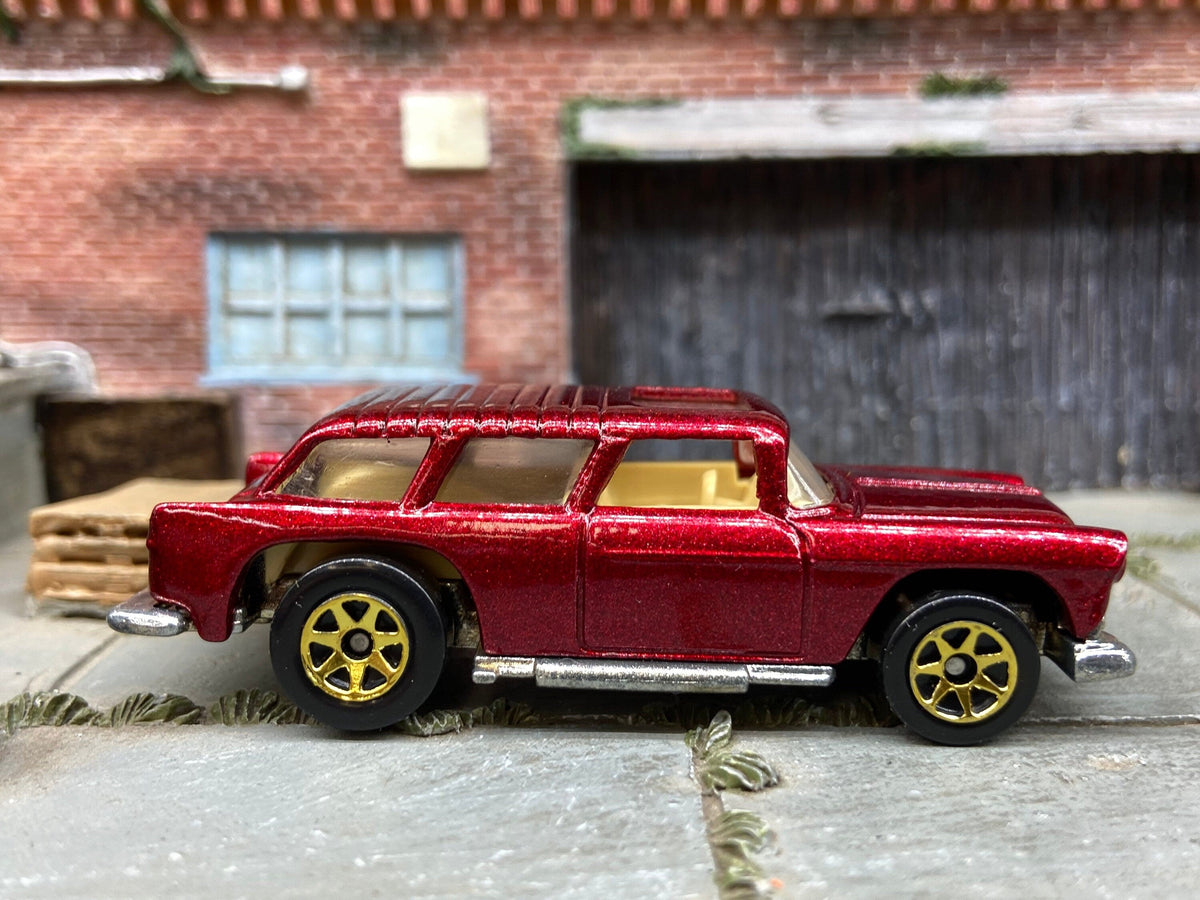
This guide is about comparing generations and choosing a fair sample. For the scale procedure on individual cars, use the Hot Wheels mass-and-balance guide. The featured 1955 Chevy Nomad describes the represented vehicle; it does not by itself date the toy's release.
Decide which question you want to answer
One casting over time: identify two releases of the same casting and verify any construction changes. Keep color, trim, extras and known modifications in the record. Shared full-size vehicle names do not establish identical miniature tooling.
Different models you own: compare the actual measurements, but describe the result as a comparison of those examples. Differences in length, width, scale or component count may be as relevant as age.
A whole market or era: define the population and a repeatable sampling method before measuring. A handful of favorites cannot establish the average for all manufacturers, scales and price categories.
Separate release dates from dates printed on the toy
A base copyright date may refer to the casting's design. The year in a vehicle name may refer to the full-size car. Neither is automatically the production or sales date of the miniature in your hand.
Use release-specific packaging, item numbers and reliable catalog evidence where available. If the date remains uncertain, record a range or “unconfirmed” instead of forcing the car into a decade. Keep restored or wheel-swapped examples distinct from documented original examples.
| Variable | Record before interpreting |
|---|---|
| Identity | Manufacturer, casting and exact-release evidence |
| Size | Actual length, width and height; stated scale when documented |
| Construction | Documented body/base materials and opening or added components |
| Condition | Missing pieces, repaint, repairs and known modifications |
| Measurement | Bare-car mass, scale resolution and repeated readings |
| Sample rule | How examples were selected; which categories were excluded |
Why a collection can give a misleading impression
Older toys that survive in a collection are not a random sample of everything once sold. Owners may have kept larger, sturdier-looking or favorite models and discarded damaged examples. Your current purchases may favor a different size or product line.
To explore an era pattern, set selection rules without first picking only the cars that feel heavy. Include a comparable mix of sizes and categories, record uncertain dates, and report the sample size. Small samples should stay exploratory; do not convert them into a universal historical claim.
Keep the mean or median, if calculated, attached to that sample and method. The result is not an industry statistic merely because it is expressed to several decimal places.
These photos show identity differences, not measured era averages


Measure first; explain construction second
Use the same scale and bare-car setup, zero it, and repeat readings. Packaging makes a different measurement. A missing interior or accessory can change a vintage example's mass, while replacement wheels can change a custom's mass.
Even after measuring, a difference does not identify which component caused it. Material density, amount, geometry and component count all contribute. Do not infer a precise alloy or factory cost from the word “diecast,” and do not dismantle an original collectible merely to complete a chart.
Weight does not certify quality, safety or speed
Evaluate finish, assembly and intended functions on the actual model. For a child, follow product-specific age labels and warnings; the CPSC's toy-safety guidance is not a blanket rule that every new car must be lighter. An old toy's survival is not a current safety assessment.
For track use, compare repeatable runs rather than heft. The rolling guide separates alignment, rubbing and course conditions from a simplistic heavier-is-faster claim.
Shop for documented details
Choose loose cars for actual-item inspection, carded offers when packaging and edition matter, or custom builds when modifications are wanted. Keep those categories separate in a historical comparison.
Make the conclusion no broader than the evidence.
“These identified examples differ by this measured amount” is useful. A claim about every old or modern toy needs representative evidence this guide does not pretend to supply.

