

Reviews - Ratings - Buyer Insights
Custom Hot Wheels Buyer’s Guide: How to Spot a Quality Build
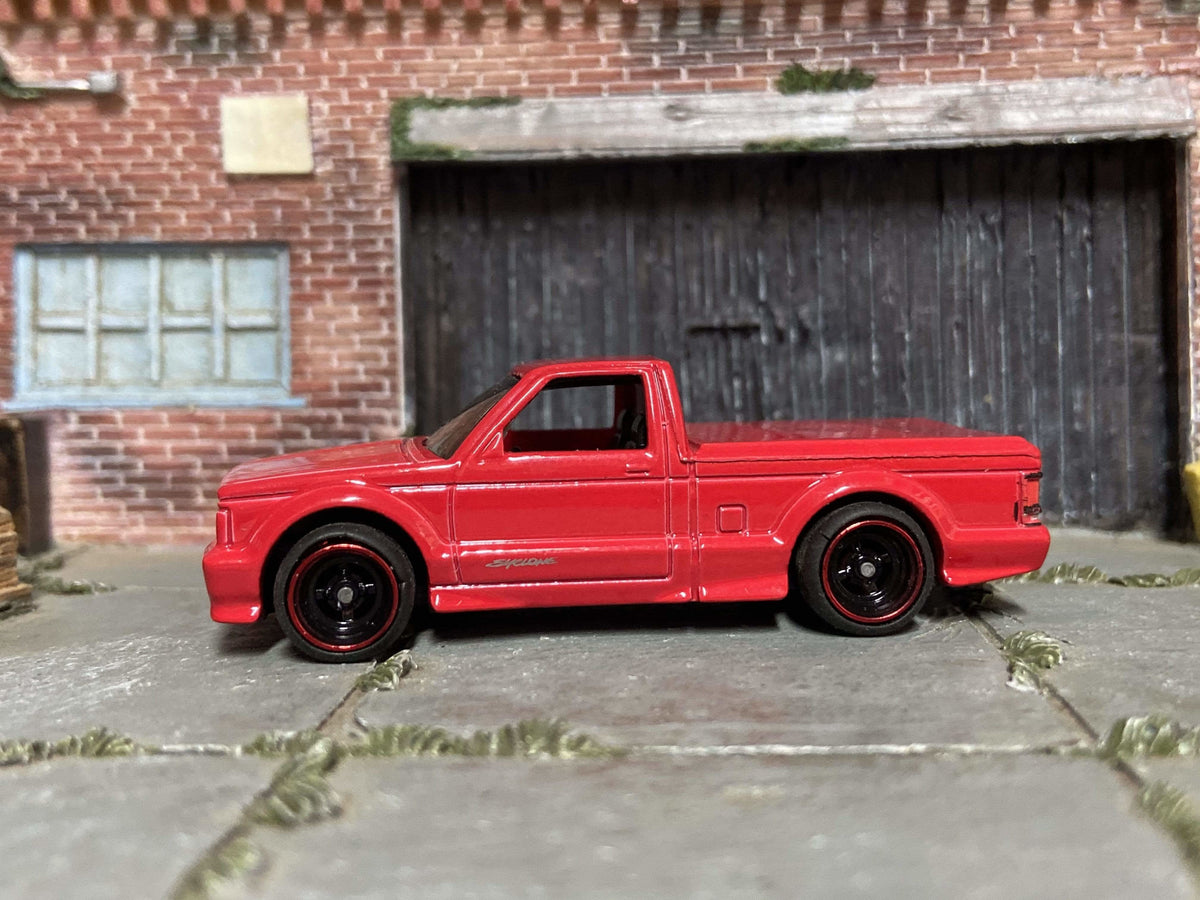
Custom GMC Syclone shown as a finished-build example. The visible wheel setup is an aftermarket modification, not a factory variation.
A quality custom Hot Wheels should look intentional from every angle. Good wheels alone do not make a good build. Paint preparation, stance, axle fit, trim, assembly, honesty, and actual-item photos all matter.
Shop Muncle Mikes custom Hot Wheels
Quality scorecard
| Area | What good looks like | Warning signs |
|---|---|---|
| Paint | Even coverage, clean edges, cured finish | Dust, runs, fingerprints, thick door lines |
| Wheels | Centered, matching scale, free rolling | Rub, wobble, uneven spacing |
| Axles | Straight and properly retained | Excessive play or protrusion |
| Stance | Balanced and intentional | Body drag or mismatched ride height |
| Assembly | Clean screws or secure rivet work | Loose base, damaged posts |
| Details | Controlled trim and realistic accents | Smears, inconsistent lines |
| Description | Clearly says custom and lists modifications | Implied factory rarity |
1. Inspect paint preparation
Good custom paint begins below the color coat. Look for smooth panels, preserved body lines, clean windows and interiors, and no paint bridging between parts. Metallic and candy finishes should appear even rather than cloudy or patchy.
2. Check wheel scale and fit
Wheels should suit the body, sit equally on both sides, and roll without contacting the fenders or base. Rubber tires add realism, but oversized or poorly spaced wheels can weaken the build.
3. Look at stance from the front and rear
Side photos can hide crooked axles. Front and rear views reveal toe-in, toe-out, uneven ride height, offset problems, and tires extending too far beyond the body.
4. Confirm how the car was opened and closed
Many customs are drilled to separate the body and base. That is normal when disclosed and completed cleanly. Check for damaged posts, loose bases, sharp edges, glue residue, or screws that sit unevenly.
5. Separate custom value from factory rarity
A custom may be one-of-a-kind as artwork, but it is not a factory error, Treasure Hunt, prototype, or original variation unless evidence supports that claim. The best sellers explain the starting casting and every modification.
6. Demand actual-item photos
The listing should show the exact car, including both sides, front, rear, top, base, wheels, and close-ups of important details. Generic example photos are not enough for a handmade piece.
Build levels
| Level | Typical work | Best buyer |
|---|---|---|
| Wheel swap | Wheels, tires, axles | Collectors wanting realistic stance |
| Detail build | Wheel swap plus trim, lights, interior | Display collectors |
| Full custom | Strip, repaint, detail, stance, assembly | Collectors seeking unique art |
| Restomod | Restoration plus tasteful upgrades | Vintage-casting fans |
Questions to ask before buying
- Is this the exact car shown?
- Was the body stripped or painted over?
- Does it roll freely?
- Was it drilled?
- How is the base secured?
- Are any parts reproduced or handmade?
- Is the packaging included?
Are wheel-swapped cars considered customs?
Yes, but they are usually a lighter level of customization than a full repaint and detail build.
Do custom Hot Wheels hold value?
Value depends on workmanship, design, builder reputation, subject matter, condition, and buyer demand.
Are rubber tires always better?
They often improve realism, but wheel fit, scale, alignment, and stance matter more than tire material alone.
Should a custom roll?
That depends on the stated purpose. Display-only builds can be acceptable when clearly disclosed, but a rolling build should roll smoothly.
Choose your path
Buy a finished custom · Build your own · Shop wheels and tires
More custom Hot Wheels buying help
Use the Custom Hot Wheels buy-or-build guide to compare finished cars with DIY projects. The rubber-tire buyer guide explains wheel-swapped customs, and the custom parts guide covers wheels, tires and fitment.
Use this Custom Hot Wheels Buyer’s Guide guide as a working process
For this article, judge a custom build by paint, body alignment, axle fit, wheel clearance and rolling function. Use a fixed photo order—front or package, both sides, wheels and underside—so two examples can be compared without relying on seller shorthand.
DIY kits are not finished customs; the club excludes wheels, tires and axles. Record uncertainty directly rather than converting a partial match into a factory, rarity or value claim.
| Start | Define the exact collecting task |
|---|---|
| Record | Photographs, identity and condition |
| Decision | Use evidence before price or action |


