

Hot Wheels Memes
Hot Wheels Service Center: Identify, Check and Display It
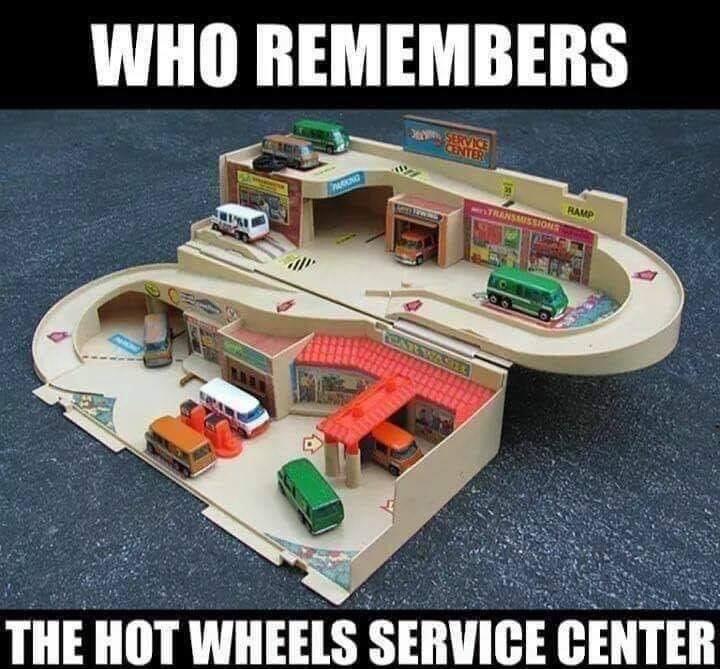
The Hot Wheels Service Center in the “Who remembers?” image has a cream two-level garage, curved ramps and a red canopy, with vans parked around it. If that looks like the set in your attic, start by matching its markings and layout to the correct instructions. A familiar shape can help you recognize it; it cannot tell you whether every piece is present.
Then decide what you want from the set: an original example with its documented accessories, or a garage for displaying cars you enjoy. That choice changes which missing pieces matter and whether a replacement is worth pursuing. The nostalgia image is not a parts diagram or an offer to sell the pictured playset.
Identify the version before shopping for parts
Look underneath the base and on separate components for a product number or molded code. Compare those markings with the box or instructions, then check the number of levels, ramp positions, signs and attachment points. In the featured image, the upper parking area, the side ramps and the lower red canopy give you specific features to compare. The exact year and packaged contents cannot be established from this photograph alone.
Similar names can lead to very different sets. Mattel lists the Super Service Center R1711 as a 2010 release supplied with one Hot Wheels car. Its Sto & Go FTC98, released in 2018, includes five cars and folds for storage. Those are separate documented products; neither record, by itself, identifies the garage in our image. Use the contents list for your exact product rather than borrowing one from a set with a familiar name.
If you cannot match a code yet, keep the identification provisional. Ask a seller for a clear underside photo and any surviving paperwork before buying a donor set. A molded part number can help identify a component without proving that every other piece in the box belongs with it.
Check what is missing, then check what works
Lay the loose pieces beside the assembled structure and compare them with the matching instructions. Check the base, upper floor and supports first. Then work around each ramp connection, sign and accessory shown for that version. This order helps you spot a missing structural part before getting distracted by faded decoration.
Completeness and condition are different questions. A ramp may be present but unable to stay attached because its tab is broken. A clean garage may still lack a sign or accessory. Inspect the underside of connection points as well as the visible surfaces, and look for cracks, missing tabs, distortion and earlier glue repairs. Describe an untested moving feature as untested.
For a replacement ramp, compare its attachment shape, width, peg spacing and orientation with the connection on your set. Color alone is not enough. Stop if the pieces resist or sit at the wrong angle; forcing a near match can damage the connection. A replacement that works for your display should still be identified as a replacement.
Choose the kind of example you actually want
| Your aim | What matters most | How to compare a purchase |
|---|---|---|
| Documented original example | The correct version, its listed contents and disclosed replacements. | Check parts, labels and paperwork individually. A box does not prove that everything inside is original or complete. |
| Personal garage display | A stable structure, the appearance you want and room for your chosen cars. | An incomplete set may suit you if the missing item does not affect the display. Include the cost of any repair you still need. |
| Restoration project | Clearly identified faults and suitable replacement parts. | Find a plausible source for the missing parts before paying extra for a project that depends on them. Disclose repairs if you later sell it. |
When comparing used sets, ask for the same views: all included pieces together, the underside, close-ups of connectors and repairs, and the assembled garage. Separate the condition of the box from the condition of the playset. A seller's asking price is only an asking price; compare the actual contents and work required rather than treating every “Service Center” listing as equivalent.
Build a display without rewriting the set's history
The vans in the image give the garage a busy workshop scene. You could follow that theme, group your own favorite cars by color, or use a fantasy casting as the center of attention. Keep those choices separate from claims about the vehicles originally supplied with your particular set.
Before placing a car on a ramp or beneath a canopy, compare its width and height with the available space. Check clearance around exposed engines, roofs and wheels, and use a level parking area if a ramp is a poor match. Mattel's R1711 description itself warns that some Hot Wheels vehicles are unsuitable, so a shared brand is no guarantee of fit. The car below is a display option, not a tested match or replacement playset component.
Purple-and-orange Hot Wheels Twin Mill

The purple body and orange lower section make this loose Twin Mill a colorful focal point for a personal garage scene. Its two exposed engines give it a different character from the vans in the nostalgia image. The side view partly hides the far engine; the product gallery includes a higher angle.
It is sold without its original card or blister. Review the exact car's photos for condition and check its dimensions if your parking space is tight. It is not represented as an original Service Center accessory.
For a different theme, browse the individually listed loose Hot Wheels and compare each car's photos. If you also need to identify the cars stored with your garage, use our guide to identifying and recording your first five Hot Wheels. If racing is your aim, our Super 6-Lane Raceway buying guide explains what to check in that different type of set.
Questions before buying or setting up a Service Center
Does the featured image show a complete set?
It shows a garage arranged with several vans. It does not show a matching contents list or every connection, so it cannot establish completeness or prove which vehicles originally came with the set.
Should I reject a set with replacement labels or parts?
That depends on your aim. Disclosed replacements may be acceptable for a personal display, while an original example requires closer checks. Compare the actual replacement with the correct version and keep the distinction clear if you sell the set later.
Can any loose Hot Wheels car use its ramps?
No fit is guaranteed here. Body width, height, exposed details and wheel clearance vary. Check the car against your actual garage before using a ramp or enclosed space; the Twin Mill card is a display suggestion, not a compatibility claim.
Does buying the pictured Twin Mill include a Service Center?
No. That listing is for the individual loose car. The garage and vans in the featured nostalgia image are not included.
What should I ask a seller when one piece is missing?
Ask which piece is missing, whether its absence affects the structure, and for close photos of the empty connection. Compare those with the correct instructions before buying a substitute. “Almost fits” is not a useful assurance.
Keep any family story with the garage, along with a few photos of its markings and repairs. That preserves the memory while letting a future owner understand the set as it is today. Return to the Hot Wheels and Matchbox collector guides for more identification and collecting help.
For more display and model projects, explore the Hobby Learning Center.

