

Hot Wheels
Custom 1:64 Wheels for Hot Wheels: Styles, Fit & Swaps
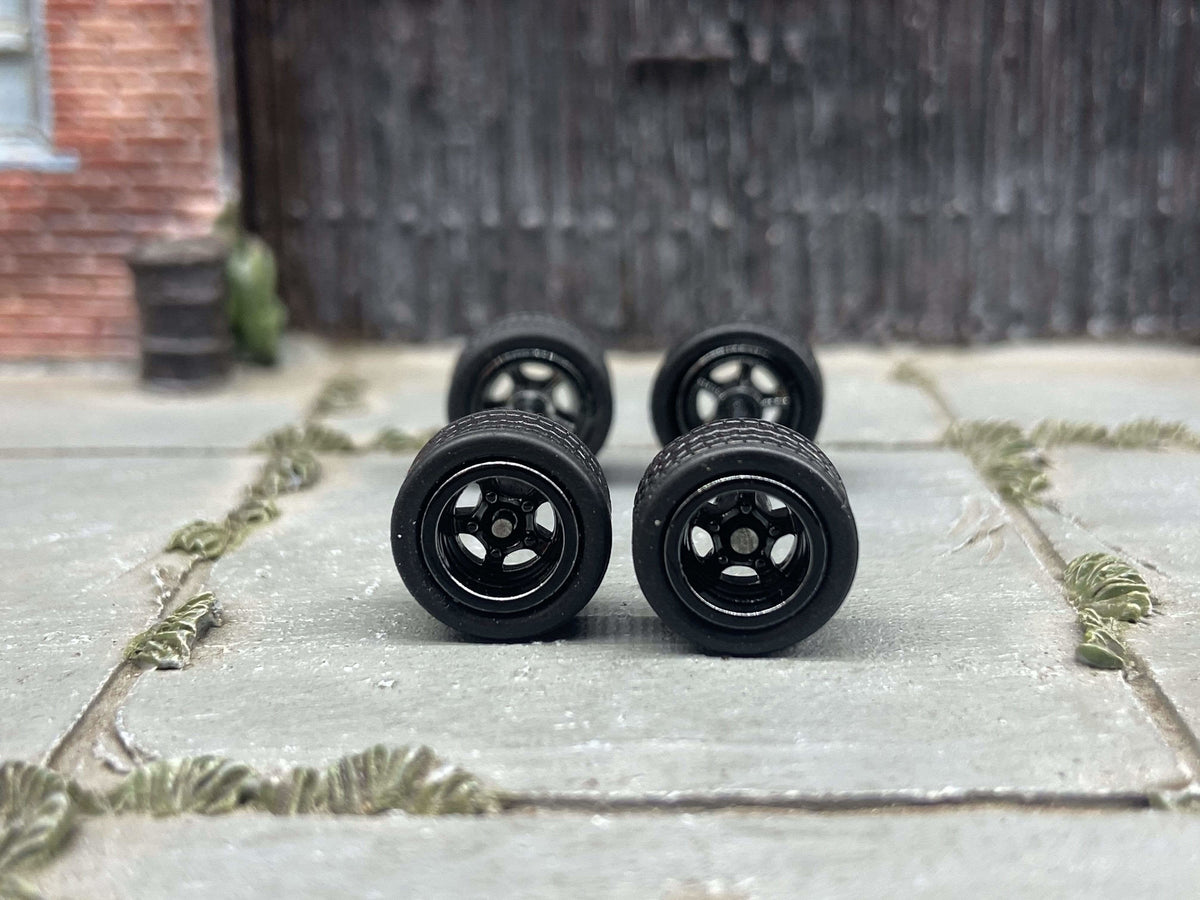
Sometimes the best custom starts with a car you already own. You love the color, you love the casting, but the wheels just don't do it for you. Swap them out and that same Hot Wheels or Matchbox can look like a completely different build.
A set of five-spoke mags can give a muscle car an old-school attitude. Low-profile tires can sharpen up a street car. A taller rear tire can make a hot rod look ready for the strip. That's the fun of custom 1:64 wheels: a small change makes a big difference.
Of course, the wheels have to fit. Here's how to choose a look you like, understand the sizes, and avoid the little problems that can turn a quick wheel swap into an afternoon of frustration.
First, decide what kind of car you're building
Before looking at millimeters and axle lengths, picture the finished car. Are you after a clean street look, a period-correct hot rod, or something a little wild? There isn't one right wheel for every casting, but a few combinations are worth considering.
Muscle cars and classic hot rods
Deep-dish five-spokes, chrome mags and redline-style tires look right at home on many vintage American cars. Want a drag-strip look? A smaller front wheel and a taller or wider rear tire can help, provided the rear fenders have room for it.
JDM, tuners and modern street cars
Multi-spoke, six-spoke and mesh-style wheels can give a tuner a purposeful stance without needing a full repaint. Pay attention to wheel depth: a deep face that looks great in a photo can push the tire too far outside a narrow body.
Race cars and track builds
Look for a wheel face and tire profile that suit the car's racing era. A touring car, endurance racer and vintage dragster shouldn't all end up with the same wheel setup just because the parts are labeled “1:64.”
Pickups, off-roaders and gassers
Chunkier tires can be the whole point of the build. But a tall tire needs room above and behind the wheel, not just a large-looking wheel arch. Test with the body and base together before committing.
Not sure what look you want? Set two or three wheel styles beside the car and take a side-on photo of each. It's surprisingly easy to spot the winner before taking anything apart.
Rubber tires, plastic wheels and Real Riders
Basic Hot Wheels often use hard plastic wheels with the tire and rim molded as one piece. Aftermarket custom sets may use a separate rim and rubber tire, which can add visible tread, a more convincing sidewall and a different finish.
Real Riders is Hot Wheels' name for its factory rubber-tire wheel designs. A custom set with rubber tires isn't automatically a genuine factory Real Riders set, and a wheel swap doesn't make a modified car an original premium release. That distinction matters when buying, selling or cataloging a collectible.
Rubber tires can look fantastic on a display build. They don't guarantee a faster car on a track, though; free-spinning axles, alignment and tire friction still matter. Decide whether your priority is appearance, rolling smoothly or racing.
Make sure the new wheels will actually fit
Here's the part that's easy to overlook: 1:64 is a scale, not a universal wheel size. A set marked 10 mm might be just right for one car and far too small for another. The same goes for 12 mm wheels. Even two releases of a similar casting can have different bases or axle arrangements.
- Measure the original tires. Note the outside diameter at the front and rear separately. Don't assume they're identical. Ask whether the replacement listing's measurement refers to the bare rim or the complete mounted tire.
- Check width and depth. Measure the tire's side-to-side width and look at the inner hub. The outside edge may clear the fender while the inside rubs the base or interior.
- Check the axle setup. Compare the usable axle span, shaft diameter, wheel bore and how the wheels are retained. A longer axle can change the stance; a short one can pinch the wheels against the chassis.
- Put the whole car together for the test. Temporarily position the body, interior and base as they will sit when finished. Spin each wheel, look for contact at both ends, and give the car a gentle roll on a flat surface.
One useful rule: if a replacement tire is 2 mm larger in outside diameter, it extends about 1 mm farther from the axle in every direction. That can be enough to create a rub. It isn't a complete fitment test, since width, hub shape and axle position matter too.
For detailed measuring photos and another fitment checklist, see our Hot Wheels wheel-size guide.
Four custom wheel sets to compare
These are real examples from the Muncle Mikes wheel collection. The listed sizes are useful starting points, not promises that a set fits every Hot Wheels or Matchbox. Check each product page for the current description, contents and availability.


Want to see more finishes and tire styles? Browse the Hot Wheels and Matchbox wheels and tires collection.
Know what you're buying before the wheels arrive
“Wheel kit” can mean different things from one listing to another. A set of four wheels with rubber tires is not the same purchase as a bag of tires without rims, or an axle kit without wheels.
- Complete wheel-and-tire sets: look for the number of mounted wheels, whether front and rear sizes match, and whether axle hardware is included.
- Tires only: these need rims with the right diameter and tire seat. Don't assume they stretch over any wheel.
- Axles and sleeves: check the diameter, usable length and how the ends hold the wheels in place. Some aftermarket arrangements use multiple pieces rather than one solid axle.
If the listing doesn't explain a dimension or included part, ask before ordering. The casting name, a photo of its underside and the front and rear wheel measurements are much more helpful than simply asking whether a set “fits Hot Wheels.”
Planning your first wheel swap
You don't need to strip and repaint a car to enjoy customizing it. A straightforward wheel-only project is a great place to start. Choose a common loose car you won't mind practicing on rather than opening a rare, valuable or sentimental original.
- Take a before photo. Get one from the side and one from underneath. You'll have a reference for the original stance and axle arrangement.
- Look at how the base is secured. Many factory cars have riveted body posts. Other builds, including some prepared DIY kits, use different assembly methods. Decide how you'll access and secure the replacement axles before cutting or drilling anything.
- Choose the right method for that car. Some swaps require opening the body; others can use an accessible axle or a suitable multi-piece axle system. “No drill” does not necessarily mean no cutting or a reversible modification.
- Test the fit before final fastening. Check that both axles sit straight, the wheels stay securely retained, and each tire turns freely with the body and interior in place. Keep adhesives away from rotating parts.
- Roll it, then finish it. A smooth gentle roll, even stance and clear fenders are better signs of success than the wheel simply fitting inside the opening.
If the chosen method involves drilling, cutting metal or sharp axle ends, secure the workpiece, use appropriate eye protection, and follow the tool manufacturer's instructions. Children should have appropriate adult supervision.
For a closer look at the process, use our wheel-swap tips and video or read the no-drill wheel-swap guide. If you'd rather start with a prepared project, look through the DIY Hot Wheels kits.
Three common problems and what to check first
The wheels turn with the base off, then rub when it's assembled
Check the inside of the wheel arch, the bottom of the interior and the inner hub. The full car may be pressing against a tire that had plenty of space on the bare chassis.
One wheel wobbles or won't stay on
Look for a bent axle, an incorrect bore or an insecure retaining method. Adding glue to a rotating joint usually creates a different problem instead of fixing the fit.
The car sits too high, too low or unevenly
Compare the front and rear tire diameters with the originals, then check whether the axles are straight and the base is fully seated. A wheel can fit without giving the car the stance you wanted.
Our full wheel-swap troubleshooting guide goes deeper into rubbing, wobble and alignment.
Quick answers about 1:64 custom wheels
Will any wheels labeled 1:64 fit my Hot Wheels?
No. The scale tells you the intended size of the model, not the tire diameter, axle length or hub design. Check the actual donor and the replacement parts.
Should I choose 10 mm or 12 mm wheels?
Choose by the car you're modifying. Compare the original front and rear sizes with the replacement set, and confirm what the seller's size measurement includes. Neither number is a universal Hot Wheels size.
Are rubber tires better than plastic wheels?
They can give a custom more realistic tire detail, but “better” depends on what you want. If you're building for track performance, tire friction and smooth rotation matter as much as appearance.
Are all rubber-tire wheels genuine Hot Wheels Real Riders?
No. Real Riders is a Hot Wheels wheel designation. Aftermarket custom wheels can use rubber tires without being factory Real Riders.
Can I do a wheel swap without drilling?
Sometimes. It depends on the base, access to the axle and the replacement hardware. Some methods still require cutting the original axle, so don't assume a no-drill swap is reversible.
Make the next car yours
You don't need a huge workbench or a perfect paint job to get started. Pick a car you like, choose a wheel style that makes you smile, and take the time to check the fit. A clean wheel swap is a satisfying little project—and it might be the first of many.
When you're ready, see the custom wheels and rubber tires at Muncle Mikes. And if you decide you'd rather enjoy a finished build, you can always browse our custom Hot Wheels instead.

