

News
2022 Hot Wheels L2593-977MPR Case: Code & Inventory Guide
Direct answer: Preserve L2593-977MPR exactly as printed on the carton. Photograph the full label, tape, seams, damage, and opening sequence before interpreting the code or moving the cars. Then inventory the carton, retail cards, and physical vehicles as separate evidence. Do not shorten the identifier to one letter, guess what every suffix character means, or treat one case opening as a complete 2022 assortment or a guaranteed Treasure Hunt list.
An archived Muncle Mikes entry describes a 2022 Hot Wheels case marked L2593-977MPR. That recorded identifier does not establish the contents of another carton, and the article’s publication date does not establish the case year.
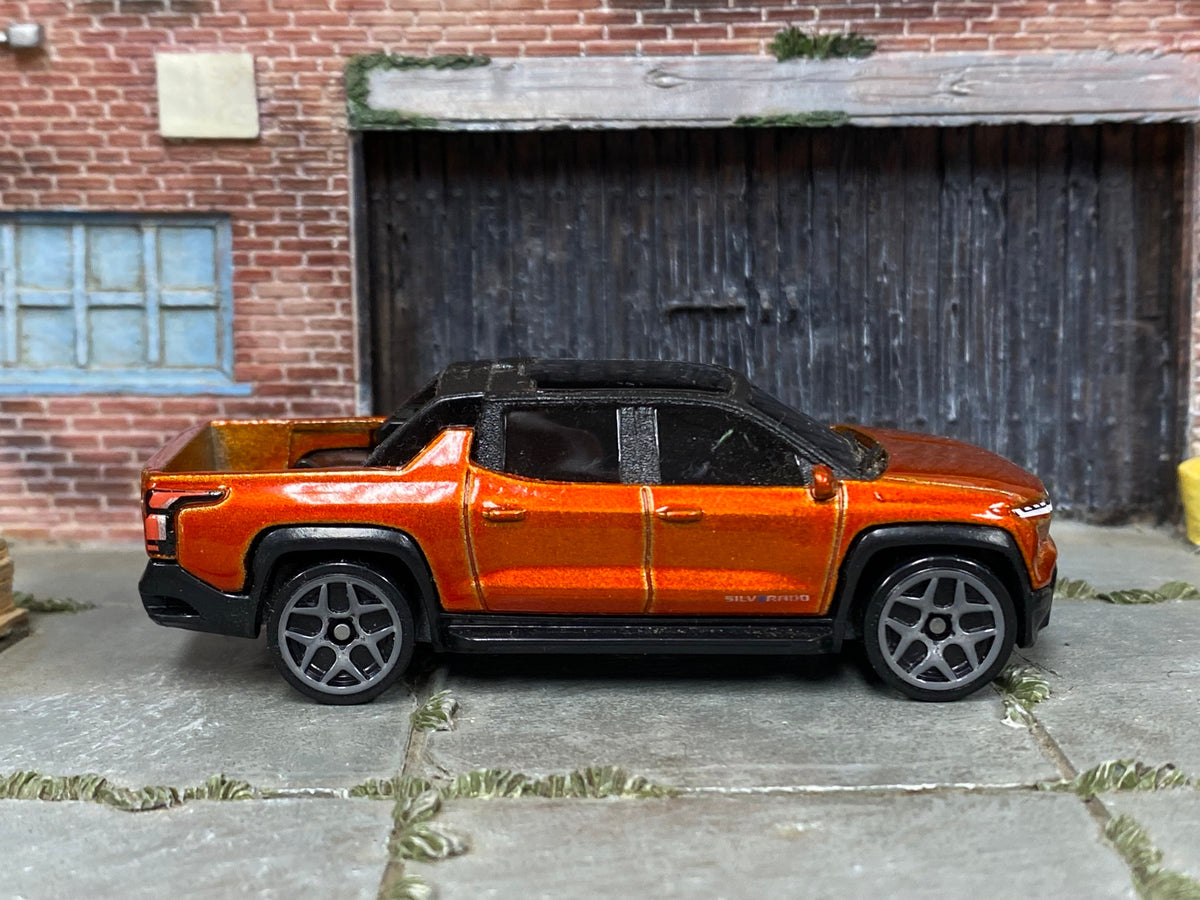
Featured image: Muncle Mikes’ photograph of an orange diecast pickup illustrates an individual vehicle record. It is not presented as proof of the contents of the archived L2593-977MPR carton.
What the full code can establish—and what it cannot
The safest use of a carton code is descriptive. It lets you distinguish the photographed box from another box whose label differs. It can also help you find matching documentation when the complete string is preserved. The printed identifier does not, by itself, prove the physical contents, sealing history, chase-car presence, package condition, or meaning of every suffix character.
| Evidence | What it supports | What it does not prove alone |
|---|---|---|
| Complete L2593-977MPR label | The identifier printed on the observed carton. | A universal list of cars or a decoded meaning for every character. |
| Tape and carton seams | The visible condition at the time of documentation. | An unbroken supply chain or guaranteed factory sealing. |
| Opening video | Cars and package details clearly visible in that recording. | Hidden base details, unreadable card numbers, or contents of another carton. |
| Individual product listing | The exact item and condition shown in that current listing. | Proof that the item came from this archived case. |
| A repeated car | A duplicate observed in the documented inventory. | A production frequency, packing ratio, or rarity percentage. |
Photograph the carton before opening
- Capture all six sides. Make one full photograph of each panel and close photographs of labels, stamps, handwritten notes, punctures, stains, and crushed corners.
- Transcribe the complete code. Preserve hyphens, suffixes, second labels, and quantity wording exactly as printed.
- Record tape and seams. Show overlaps, lifted edges, cuts, double tape, replacement tape, and labels covering a seam.
- Record provenance separately. Note where the carton came from, when it was acquired, what the seller stated, and which claims are documented.
- Measure before opening. Record carton dimensions and weight as descriptive facts, not proof of authenticity.
- Keep uncertainty visible. If a label is unreadable or the sealing history is unknown, write that directly.
Retailer shorthand can be useful for searching, but it should never replace the printed code in the primary record. Keep shorthand, seller titles, and later interpretations in separate fields.
Keep carton, card, release, and car identity separate
A case-opening record contains several levels of identity. Combining them creates false certainty.
| Level | Record from the physical evidence | Common mistake |
|---|---|---|
| Carton | Full printed code, labels, tape, dimensions, condition, and provenance. | Using “2022 case” as if it were the complete identifier. |
| Retail card | Series wording, collector number, product number, language, and package format. | Using the carton code as the identity of an individual card. |
| Release | The documented combination of casting, color, graphics, wheels, interior, windows, base, and packaging. | Assigning the best-known or most valuable version of the casting. |
| Physical example | The actual card, blister, and car, each with its own condition. | Treating one example’s damage as a release difference. |
The Hot Wheels casting and variation identification guide explains how to move from body shape to an exact documented release without treating a base copyright date as the retail year.
Preserve the opening sequence
Prepare a clean, dry work area with enough space for the carton, each layer, and an inventory sheet. Keep drinks, food, adhesive, and cutting debris away from cards and blisters.
- Begin with the unopened state. Photograph or film the carton and label before the first cut.
- Open only what is necessary. Keep the blade shallow and away from card edges.
- Photograph the first view inside. Record orientation, dividers, empty spaces, shifted cards, and visible damage before moving anything.
- Number each layer or group. Photograph it in place, then remove and inventory one package at a time.
- Keep packing material. Preserve dividers, loose labels, inserts, and fragments until the record is complete.
- Do not reorganize first. A display arranged after opening is different from the observed packing order.
Build an auditable car-and-package inventory
Assign one row to every physical package, even when several appear identical. A useful identifier can combine the carton, layer, and sequence—for example, MPR-L2-05.
| Inventory field | What to record | Why it matters |
|---|---|---|
| Position | Layer or group and sequence within the photographed arrangement. | Connects the physical package to the opening record. |
| Casting | Name supported by the body and release-specific evidence. | Separates the model family from the exact version. |
| Visible release details | Color, graphics, interior, windows, wheels, base, series, and readable numbers. | Allows apparently similar cars to be compared accurately. |
| Card condition | Corners, creases, hanger, labels, writing, wear, and discoloration. | Card condition is separate from blister and car condition. |
| Blister condition | Cracks, crushing, separation, yellowing, debris, and possible resealing signs. | An intact car can still have a damaged blister. |
| Car condition | Visible paint, graphics, wheels, loose parts, or damage. | The package does not automatically describe the vehicle. |
| Quantity | One record per example, with duplicate totals summarized separately. | Prevents repeated cars from being mistaken for separate variations. |
| Confidence and source | Confirmed, probable, or unresolved, plus the image, frame, or reference used. | Makes later corrections possible without rewriting the evidence. |
Handle Treasure Hunt and rarity claims carefully
A case code does not guarantee a Treasure Hunt, Super Treasure Hunt, error, or chase car. Identify any candidate as an individual packaged release. Compare the actual wheels, graphics, symbols, card, and other documented details before applying the label.
Likewise, absence from one carton does not prove scarcity, and presence in one carton does not prove common production. A case opening is one observed sample with its own label, distribution path, and condition. Keep “observed in this case” separate from “known frequency.”
Use vehicle photographs and listings as comparison examples
The orange pickup photograph illustrates visible details you can record from an individual vehicle. The Volvo listing adds documented release information. Neither establishes the contents of L2593-977MPR.


These photographs show loose vehicles, so they do not provide card-based clues. That makes photographs of the car, base, wheels, and condition especially important. A current loose listing and an archived carded package should not be treated as interchangeable records.
Compare this case with other openings without merging them
The two-case comparison guide provides a reusable method: preserve each carton record, inventory every physical example, and compare only after the source records are complete. The method carries across years; the contents and codes do not.
Do not copy a count, code, or car from a 2000 opening into the L2593-977MPR record. A comparison can show that two cases differ or share a visible release, but it cannot turn unrelated boxes into one factory checklist.
Buying an individual 2022 Hot Wheels release
When you want one particular car, an individually identified listing offers more control than an unspecified case. Confirm whether the item is loose, factory-carded, opened, restored, or customized. Review the exact photographs and condition before checkout.
Browse carded Hot Wheels and Matchbox when the package is part of the target, or loose Hot Wheels when the vehicle itself is the priority. Compare completed sales only when the release, packaging, and condition genuinely match. The diecast selling guide explains how identification, photographs, condition, and comparable evidence support a listing.
L2593-977MPR questions
Does this guide decode every character in 977MPR?
No. It preserves the full printed identifier and avoids assigning unsupported meanings to its characters.
Does L2593-977MPR prove the complete assortment?
No. To document a carton’s contents, keep its opening photographs and a complete inventory together. The code alone does not replace that evidence.
Does the page publication date prove the case year?
No. That date tells you when the article was published. The case year must come from the carton, packages, cars, and supporting records.
Does an intact-looking seal prove the complete supply history?
No. Photograph the tape and provenance and describe only what the evidence supports.
Does the case guarantee a Treasure Hunt?
No. Identify any candidate from the exact packaged car rather than the existence of the carton.
Can I buy the exact unopened carton from this article?
No current case offer is implied. Only a live product page establishes what is currently available and included.
Preserve the code, then build the inventory
The strongest L2593-977MPR record begins with the complete printed label and ends with an auditable list of the actual packages observed. Keep carton, card, release, and physical condition separate; mark unreadable details as unresolved; and use current listings only as clearly labeled comparisons.
For help identifying a current MM listing, contact Muncle Mikes. This guide was written by Mike Graves. Muncle Mikes is an independent reseller and collector resource and is not affiliated with or endorsed by Mattel.

