

News
Tamiya Supra Kits Compared: Toyota Supra, GR Supra and GR Supra Custom
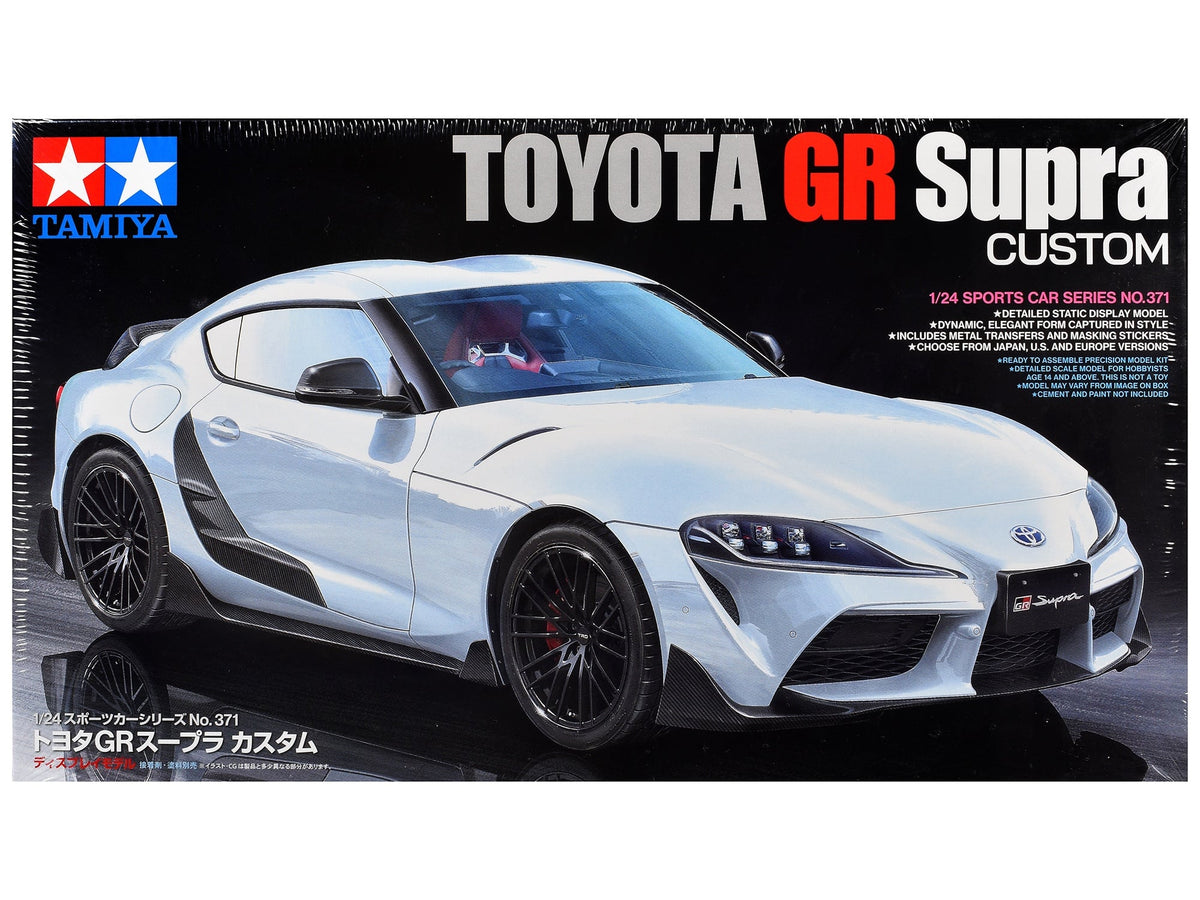
Choose Tamiya Toyota Supra 24123 if you want the earlier Supra and an engine bay to detail. Choose GR Supra 24351 for the standard modern body, or GR Supra Custom 24371 for the supplied aerodynamic styling and TRD wheel design. All three are 1:24 static plastic kits that you assemble and finish. The differences affect what you build and what will be visible on the shelf.
Compare the three kit references
| Kit reference | What you build | A useful reason to choose it |
|---|---|---|
| Toyota Supra 24123 | The earlier, fourth-generation Supra, with a tall rear wing and engine detail. | You want to paint the engine bay and display it with the separate bonnet removed. |
| GR Supra 24351 | The standard GR body with a detailed cabin, suspension and exhaust. | You prefer the standard body styling and two-part plated-and-black wheels. |
| GR Supra Custom 24371 | The GR Supra with GR PARTS-style aerodynamic pieces, a trunk spoiler and TRD-style wheels. | You want those supplied exterior details as part of one complete kit. |
24123: the earlier Supra and its engine bay
Tamiya identifies 24123 as the fourth-generation Supra introduced in 1993. Its model includes a detailed inline-six twin-turbo engine and a separate bonnet. The instructions build the engine before the body is fitted, so the engine-bay finish is part of the project from the beginning. The bonnet is shown as a separate panel; plan its fit without assuming a hinged opening mechanism.
The kit also supplies left- and right-hand-drive dashboard choices. Keep 24123 separate from the GR Supra names when matching a saved reference or gift request: choosing a dashboard cannot turn the older body into the later GR generation.

Tamiya Toyota Supra 24123, 1:24. A project for the earlier body shape and the engine beneath its separate bonnet. Paint and model cement are separate supplies.

24351: the standard GR Supra
GR Supra 24351 lists regional Japan, U.S. and Europe configurations, dedicated steering-side positions, window masks, metal transfers and a detailed underside. Its two-part wheels depict the stated real-car wheel design; the real-car wheel measurement is not the diameter of the model's wheels.
This is a good match for a display centered on the standard GR silhouette and the cabin. The manual builds the exhaust and suspension beneath the body and the separate dashboard, console, seats and headrests inside it. It does not provide the separate engine-bay assembly found in 24123. Choose the older kit if an exposed engine is the deciding feature.

Tamiya GR Supra 24351, 1:24. Choose the steering side and regional version, then finish the body and separate interior parts. Paint and model cement are sold separately.

24371: what the Custom version changes
GR Supra Custom 24371 is a complete kit with aerodynamic parts, trunk-spoiler components, TRD-style wheels and corresponding hub-logo decals. You do not need to buy 24351 as a separate base kit to complete this model.
The exterior differences include the front and rear spoiler pieces, side skirts and door trim, plus the small ducktail-shaped spoiler at the back of the trunk. Tamiya depicts the TRD 19-inch road-car wheel design at model scale. Match the finished shape you want before ordering: a paint color alone will not create the Custom kit's separate aerodynamic pieces.

Tamiya GR Supra Custom 24371, 1:24. The complete assembly kit includes its Custom exterior pieces, regional choices, window masks and metal transfers. Supply paint and model cement separately.
Choose the version before paint and cement
Choose the body styling before ordering paints or attaching optional pieces. Regional and appearance options build one selected model, not several complete cars. In both GR manuals, A identifies Japan, B Europe and C the U.S. Follow the chosen letter through the assembly drawings.
The choice reaches beyond the steering wheel: the manuals distinguish console and dashboard parts, wiper arrangements, lighting details and number-plate fittings. Some hole-making instructions apply only to particular regional versions. Read those labels before drilling or attaching a part, and keep the unused alternatives until the model is complete. For a kit or manual mix-up, use the Tamiya item-number and manual guide.
Read the instructions first, choose the finish, and list the paint, cement, masking, sanding and decal supplies the specific build needs. Dry-fit the major body, chassis and glass parts before final paint. Keep the contact surfaces clear where the instructions require cement, and follow the paint and adhesive directions for the material you are using.
The GR kits' window masks, metal transfers and waterslide decals have different jobs. The masks protect selected areas during painting; metal transfers are positioned and rubbed onto the surface as directed; waterslide decals use their own water-application process. Do not treat all three sheets as decals to soak. The model-paint guide helps you match a paint range, thinner and finishing sequence to the chosen colors.
All three kits require separate paint and model cement. Use the instructions' tool and safety guidance, including adult supervision for a young builder and the product directions for ventilation. The assembled gallery examples show possible finishes; they do not mean the box contains a painted model or a complete bench of supplies.
Questions before choosing a Supra
Are all three models the same size because they are 1:24?
No. Tamiya lists 24123 at 190 mm long and 83 mm wide. It lists both GR kits at 183 × 85 × 54 mm, in length × width × height order. Allow additional display space if you place the older Supra's bonnet beside the model.
Does Custom mean a conversion set for an existing GR Supra?
Item 24371 is a complete plastic kit. Choose it when you want the included Custom styling. A separate aftermarket conversion set would be a different purchase with its own contents and fit requirements.
Can I build three cars from the regional options?
The Japan, Europe and U.S. choices in the GR kits configure one model. Select a version and follow its marked parts; the alternatives do not supply three complete cars.
Are these motorized or radio-controlled Supras?
These three item numbers are static display kits. If you want a running model, identify the separate Tamiya product family and reference before buying equipment or parts.
Once you know the body and detail work you want, browse the Tamiya model-kit collection for other projects. Use the Collector Guides for related buying decisions or the Hobby Learning Center to plan the next stage of the build.

