

News
Rare Hot Wheels & Matchbox: How to Verify a Seller’s Claim
“Rare” is a claim to test, not a price tag.
A seller may use rare Hot Wheels or rare Matchbox to describe age, color, condition, packaging, a chase release or simply a car they do not see often. Before paying a premium, translate that word into a specific, checkable claim.
This guide does not assign a value to an unseen car. It gives you a repeatable evidence process.
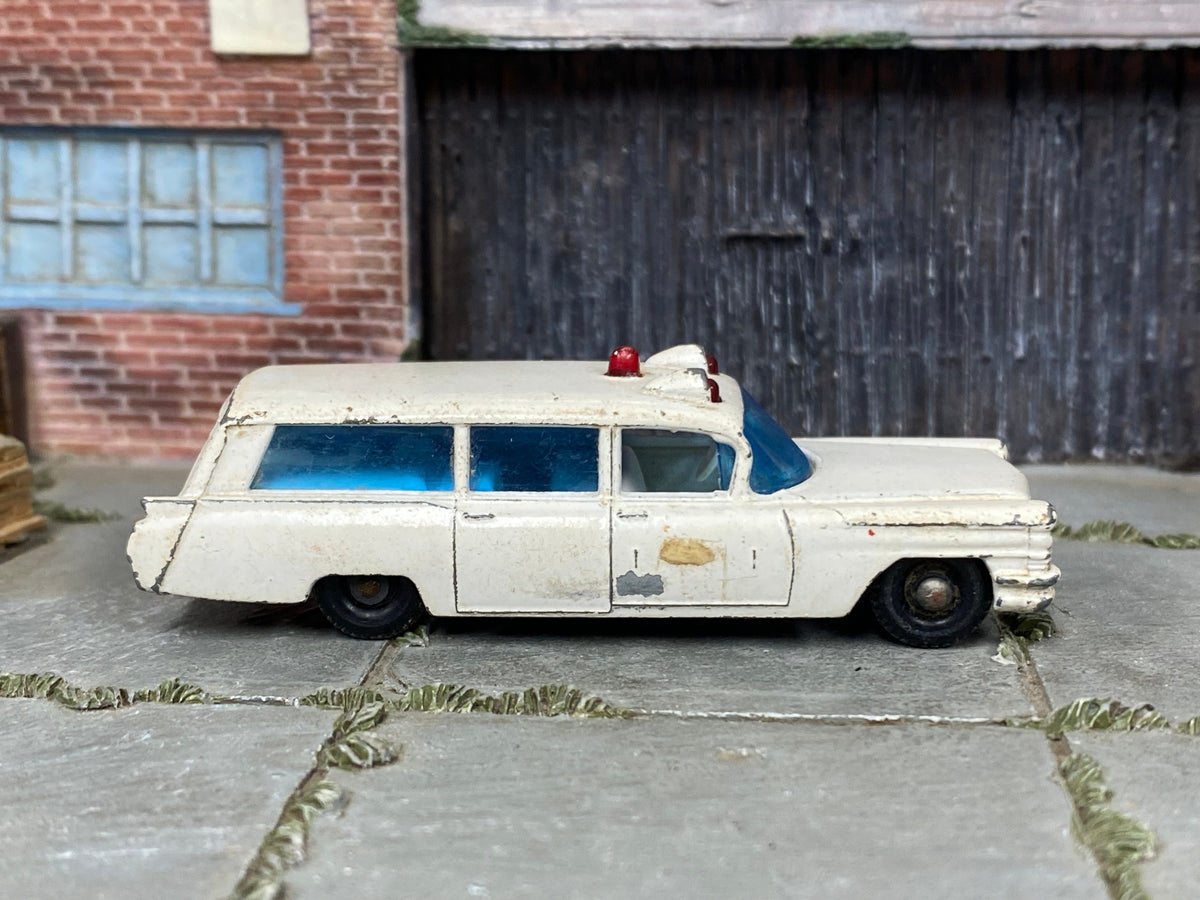
The lead photograph shows a playworn white Lesney Matchbox No. 54 S&S Cadillac Ambulance from the MM catalog. Its blue glazing, red roof beacons and visible paint loss provide a condition example; the photograph does not establish a scarce variation.
Ask what is supposed to be scarce
| Possible claim | Evidence to request | Common mismatch |
|---|---|---|
| Early release | Exact casting, country, base, configuration and reference match. | A later release shares the casting name. |
| Rare variation | Documented paint, interior, wheel, tooling or packaging combination. | Ordinary wear, lighting or replacement parts create the difference. |
| Factory error | Clear photos, release references and any provenance that help distinguish a production anomaly from later alteration. | Damage or a custom is described as a factory error. |
| Chase | Release-specific chase identifiers and packaging. | Rubber tires or metallic paint are treated as universal chase proof. |
| High-grade example | Full defect photographs and clear condition description. | “Mint” appears without evidence. |
If the seller cannot state the exact release, identity comes before rarity. Ask for the views needed to establish it.
Visual cues can be reproduced
A red stripe on the tire, a bright finish or an unfamiliar wheel does not prove an old or scarce factory variation. Later releases and customs can deliberately echo those features.

2002 Classic ’32 Ford Vicky — Red Lines
MM identifies this loose car as the 2002 Red Lines release: series 2/4, collector number 104 and toy number 54382. The purple finish, side graphics and five-spoke wheels with a red ring are visible in the photo. Check those release identifiers and the complete item; a red ring by itself does not establish an early original.

Mazda REPU custom with deep-dish wheels and rubber tires
This completed Muncle Mikes custom has five-spoke deep-dish wheels and rubber tires. The red stripes shown run along the body; they are not red rings on the tires. It illustrates a disclosed wheel change, so compare it with other completed customs when that is what you want to buy.
For a possible original Redline, use the photo identification checklist. For any brand, keep the casting, release, condition and originality in the same evidence record.
Build a defensible comparison set
- Identify the exact release and variation before searching prices.
- Use completed sales whose photos and descriptions match the country, color, wheels, packaging and condition that matter.
- Record the actual accepted item price, shipping, currency and sale date separately. If an accepted offer is hidden, leave its amount unknown rather than substituting the advertised price.
- Exclude mixed lots, replicas, restorations and different variations when they do not answer the same question.
- Describe sample size honestly. One observed sale is one result, not a dependable market range.
An active asking price shows what a seller wants, not what a buyer paid. A printed guide may help organize variants, but its date and condition assumptions still need checking.
Look for evidence of modification and repair
Request sharp images of fasteners, wheel faces, axles, body edges and any area with a different finish. Replaced wheels, repainting, reproduction parts and reassembly may still produce an enjoyable collectible, but the work must be disclosed when originality affects the claim.
Do not use cleaning as an identification test. Document first, then choose a treatment that does not erase paint, decals or age-related evidence. For a high-value or uncertain item, pause before any irreversible work.
Separate the claim from the evidence
Write down the seller’s exact wording before you compare references. “Rare color,” “early casting,” “factory error” and “chase” are different claims and need different evidence. A model name alone may cover several releases, so capture the base text, country mark, casting details, wheel construction and package information when available.
Ask for a clear set of photos rather than one dramatic close-up: both sides, roof, front, rear, underside, wheels and any packaging that is part of the offer. Use neutral light and keep each view tied to the same car. If a seller cannot provide a requested view, treat that fact as unknown rather than filling the gap with a guess.
Keep three labels in your notes: confirmed when multiple details match a reliable reference; consistent but incomplete when the evidence fits but key views are missing; and unverified when the claim cannot yet be tested. Lack of proof is not proof of fraud, but it is a sound reason not to pay an originality premium.
Save the listing, seller statements and purchase date with the photos. If you later learn a detail was wrong, your record shows exactly which part needs correction instead of turning an old assumption into a permanent collection fact.
Questions about a seller’s rarity claim
Does a red stripe on a wheel prove an original Redline?
No. Later releases and replacement wheels can use that appearance. Record the exact casting, release identifiers, wheel construction and any disclosed changes, then compare the whole combination with a reliable reference.
Is “mint” enough information for a condition premium?
Ask for specific defects and complete photographs of the car and included packaging. Paint loss, window scratches, wheel wear and repaired packaging need separate descriptions; one broad label cannot show those differences.
What if I find only one matching sale?
Keep the date, confirmed amount and photographs as one observed transaction. Explain any differences from your car and keep looking; do not turn a single result into a reliable price range or a production count.
Can clear photos prove that an unusual detail is a factory error?
They can document the detail and reveal some signs of later work. Establishing its origin may also need release references, provenance and specialist examination. Leave the factory-error claim unverified when that evidence is missing.
Buy the evidence, not the adjective.
Save the seller’s photos and disclosures, explain why each comparison belongs, and leave unresolved points labeled as unverified. Continue with the diecast listing and selling guide when you need a clear description for your own item.
Keep researching your collection
Use the Hot Wheels and Matchbox collector guides for identification and collecting decisions, and the hobby learning center for practical care and project guidance.
For a Hot Wheels value estimate based on its exact release, condition and comparable sales, use the main Hot Wheels sold-price value guide. Keep a Matchbox car’s release and sales evidence separate; a Hot Wheels comparison does not establish its value.

