

Hot Wheels Gassers
How to Identify a Real Hot Wheels Gasser (Beginner‑Friendly Guide)

Muncle Mikes collector guide · Updated October 30, 2026
The safest way to identify a real Hot Wheels gasser is to identify the casting and release—not to judge its silhouette alone. A nose-high stance, exposed engine and wide rear tires may signal classic drag-racing styling, but they do not prove a factory model, an original release or an untouched example.
Use this step-by-step guide to separate three questions: Is the casting gasser-themed? Which release is this? Is the item factory-original, modified or uncertain? Buyers and builders need different answers, and a seller's photographs should support all three.
1. Identify the exact Hot Wheels casting first
Start with a clear view of the body shape, window openings, roofline and base. Record any name or copyright markings visible underneath, then compare that evidence with the manufacturer-described casting and known releases. A date on a base may reflect tooling copyright rather than the year that individual toy was sold.
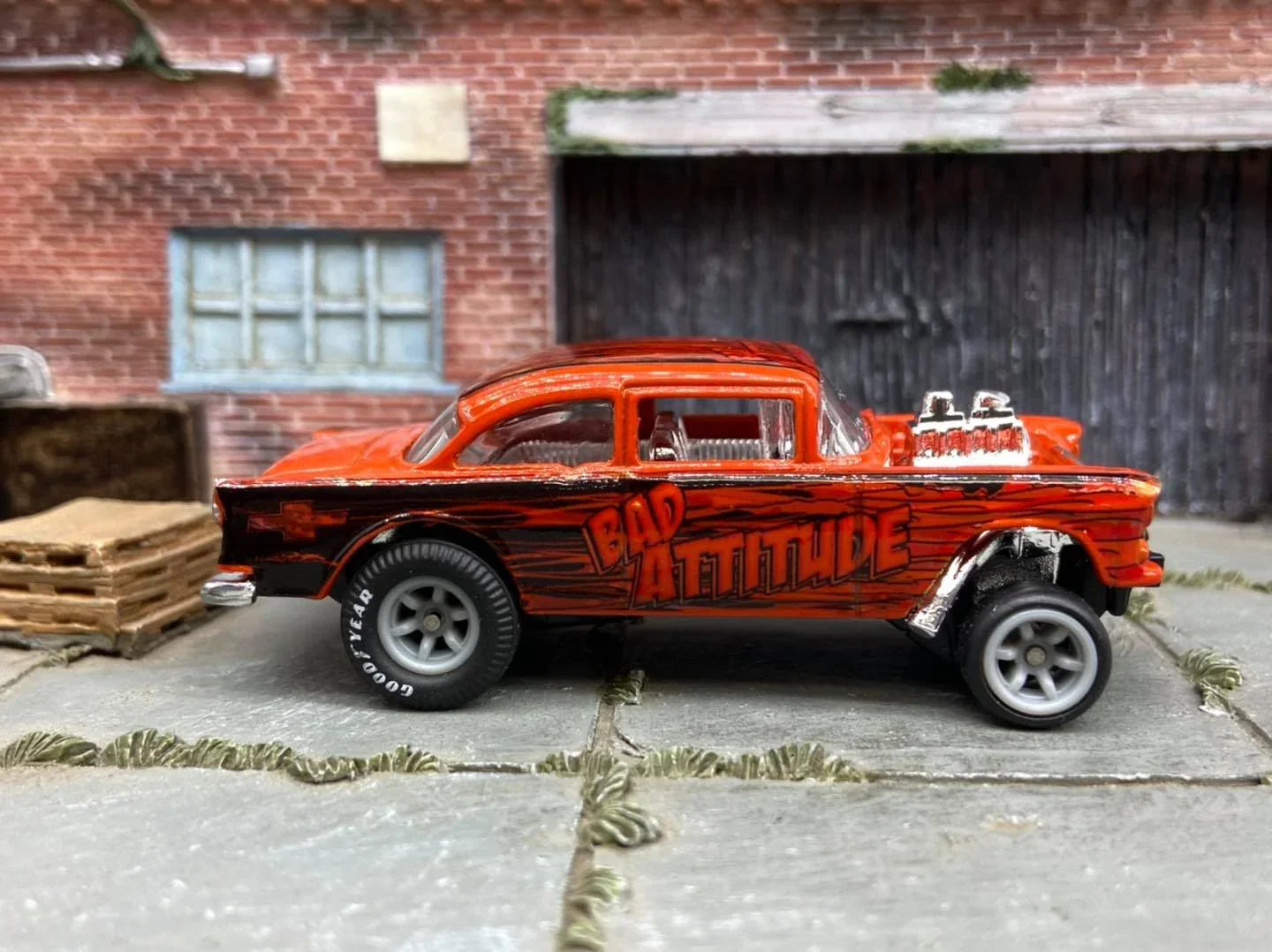
For example, the ’55 Chevy Bel Air Gasser is a named Hot Wheels casting. A ’55 Chevy with a lowered stance, or another Bel Air variation, should not automatically be sold under that same identity. Likewise, a wagon gasser and a coupe gasser are different bodies even if their colors are similar.
If the base is missing, the car has been heavily modified or photographs do not show the identifying details, describe the result as unconfirmed until there is sufficient evidence. Do not guess a release year from paint color alone.
2. Use gasser styling as supporting evidence
| Feature | What it can tell you | What it cannot prove |
|---|---|---|
| Nose-high stance | A deliberate vintage drag-racing look; check the front-to-rear angle. | The casting name, factory authenticity or speed on toy track. |
| Exposed engine or blower | Drag-inspired design on some castings. | That every gasser must have an open engine. |
| Skinny fronts and wide rear tires | A common front-runner and drag-slick appearance. | Originality or compatibility with a particular wheel set. |
| Vintage numbers and graphics | Period-style racing inspiration. | That the paint or decals were applied at the factory. |
| Base details | Potential evidence of tooling and construction. | A complete identification without comparison to a known release. |
A car can look like a gasser but be an ordinary hot rod with a modified suspension or wheel swap. Conversely, a known gasser casting does not stop being that casting when someone repaints it. The key is to describe both the casting and its present condition accurately.
For the mechanical difference between ride height and rake, read why Hot Wheels gassers sit nose-high. For wheel sizing and fit, use the gasser wheels and tires guide.
3. Tell a factory release from a modified custom
Check what the manufacturer actually sold
Compare the paint, wheel type, base, interior and packaging with reference photographs of the same release. Do not infer that a car is a premium factory release because it has rubber tires: factory premiums may use them, and custom builders may install them too. Similarly, plastic wheels do not prove a car is original.
Look for physical evidence of modification
Changed rivets, screws, wheel-swapped axles, added graphics, fresh paint or unusual base assembly can suggest work after production. None of those signs alone identifies who performed it. Some models and factory variants use different construction methods. Photograph the details and describe only what can be supported.
Use the correct selling terms
Factory-original means the verified model matches its documented release. Custom means it was intentionally modified. Uncertain is the accurate label when the evidence is incomplete. A repainted casting should not be represented as a factory RLC, Treasure Hunt or Super Treasure Hunt simply because it looks similar.
4. Request the photographs that settle the question
A single dramatic side photo is not enough. Ask for well-lit images of both sides, front, rear, roof, underside and any claimed identifying details. The visible item should match the listing's exact color and configuration.
Six-point photo and condition checklist
- Casting: shape, roofline, windows, wheel openings and base text.
- Release: paint, tampos, wheels, interior and packaging compared with the exact documented variant.
- Assembly: rivets, screws, axles, body-to-base fit and signs of opening.
- Condition: chips, decal damage, bent axles, wheel wear and missing parts.
- Seller claims: ask for evidence of rare variants, provenance or factory-original status.
- Included items: confirm whether the sale includes a loose car, package, custom parts or display case.
A pristine package does not guarantee that a loose toy inside has never been altered, and a worn package does not automatically mean the car is not original. Evaluate the toy and packaging separately.
For price and purchasing questions, continue with the Hot Wheels gasser buyer's guide. If you plan to customize instead, follow the custom gasser build guide. Check kit contents before ordering parts; not every kit includes wheels, tires or axles.
Hot Wheels gasser identification FAQ
Does a raised front end make a car a real Hot Wheels gasser?
No. It is a visual clue. Identify the casting and release from additional physical evidence.
Must the engine be exposed?
No. An exposed engine is common in drag-inspired designs, but engine visibility alone is not a reliable definition for every casting and release.
Do all factory gassers have plastic wheels?
No. Wheel materials vary by product line and release. Rubber tires can also be added by a customizer; compare the exact manufacturer version.
Does the year stamped on the base tell me the release year?
Not necessarily. A molded copyright date may belong to the tooling and can differ from the year of the specific release.
What if the base or original wheels have been replaced?
Record the modifications and avoid claiming an untouched factory variant. The original casting identity may be recognizable, but the exact release may need additional evidence.
Can I identify a rare gasser from a seller's asking price?
No. Price is not authentication. Verify the model, configuration, condition and provenance independently.
Ready to browse or build?
For finished repainted and wheel-swapped models, explore the Muncle Mikes custom gasser collection. For a project, check the gasser modification guide and confirm what the selected product includes. Collection membership is not proof of a particular factory release or of current availability.

