
Hot Wheels How To
How to Identify Hot Wheels Real Riders—and Spot Wheel Swaps
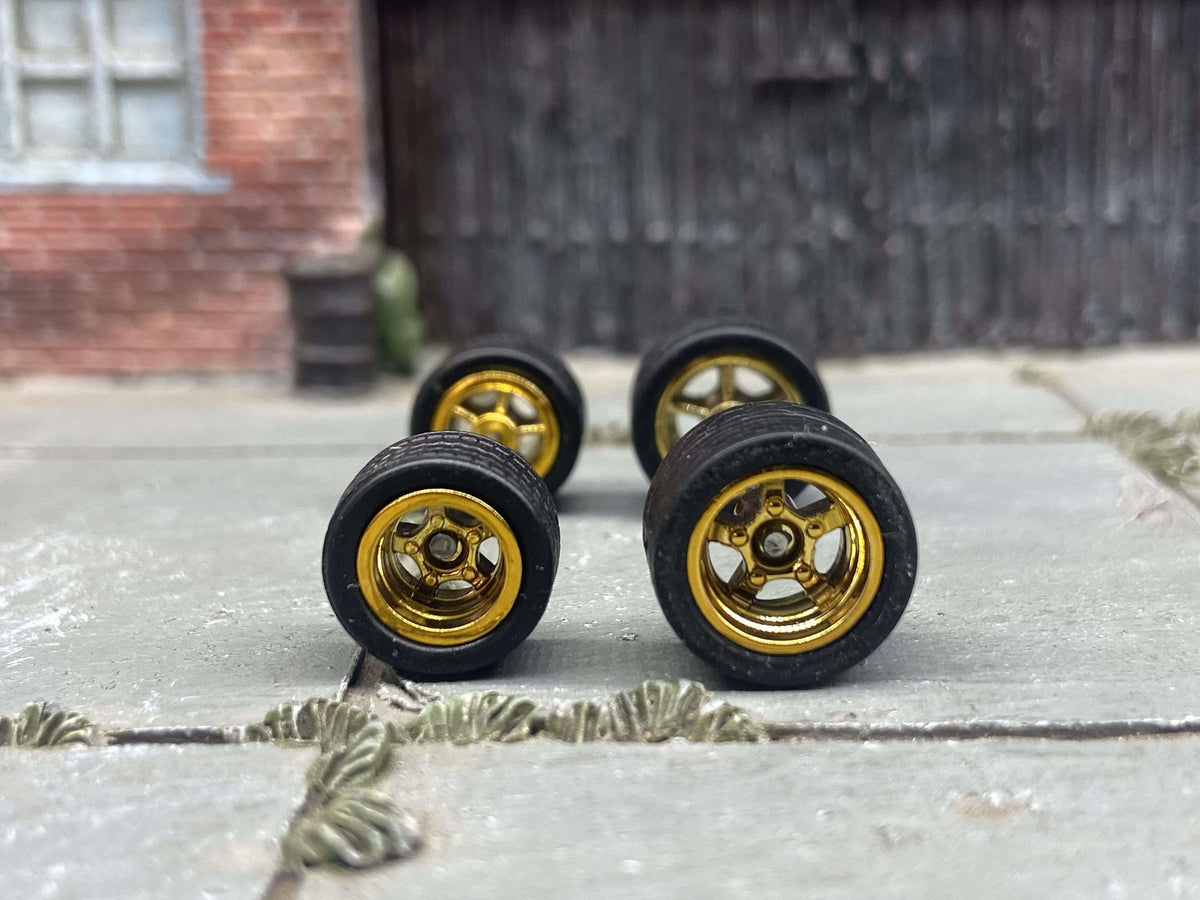
Rubber tires are a clue. The release record is the test.
Real Riders is Mattel's wheel-range name, not a generic name for every aftermarket rubber tire. First establish what the exact factory release should have, then inspect the car's present wheels and any disclosed modifications.
A genuine manufacturer wheel can also have been transplanted onto another car. Wheel identity and originality of the complete model are separate questions.
Reviewed September 22, 2026. Header: an aftermarket gold wheel set, not proof of genuine Real Riders manufacture.
Use a specific factory reference
Mattel describes the fifteen cars in its 2023 Super Treasure Hunt set HNL32 as having Spectraflame paint and Real Riders wheels. The specification concerns those identified releases, not every metallic-looking car. Manufacturer set reference.
Do not assume all RLC models use Real Riders. The 2022 anniversary Camaro HRY34 expressly uses Neo-Classics deep-dish wheels. Compare the Camaro specification. A club label is not a complete wheel specification.
What to inspect on the actual model
| Evidence | Useful comparison | Limit |
|---|---|---|
| Release identity | Year, item code, decoration and documented wheel design. | A casting name alone covers many versions. |
| Wheel face | Spokes, lip, finish and front/rear arrangement. | A similar aftermarket design can look convincing. |
| Tire and wheel interface | Visible separate components and sidewall details. | Construction alone does not identify the maker. |
| Underside | Axles, fasteners and disclosed replacement work. | Neat rivets do not prove the wheels were never changed. |
Request both side views and the underside. Examine a packaged car through its blister rather than opening a collectible merely to touch a tire. Do not pry a tire off, scratch a wheel or force an axle to test a claim.
Why weight and spin are not authenticity tests
A heavy feel measures the whole model, not only the wheels. A slow spin can result from rubbing, alignment or damaged components. Neither observation identifies the manufacturer of a tire.
Tread grooves, lettering and detailed spokes can support a comparison only when the reference shows them for that release. Absence of a generic “premium-looking” feature is not enough to condemn the wheel, and a known aftermarket swap is not a counterfeit when honestly sold as a custom.
Buying a custom instead of a factory version
Choose a finished wheel-swap custom for its actual appearance and disclosed work. For your own build, the gold five-spoke set lists two 10 mm and two 12 mm wheels with rubber tires.
Check fit and any separately needed axles. The set is a building component, not a certificate that its recipient car is a factory premium. Use the fitment guide before installing it.
Keep the conclusion proportional to the evidence
When a significant purchase depends on originality, collect clear photographs and obtain a knowledgeable independent assessment. Record unresolved points rather than paying for an unsupported “all original” claim.
For the historical context, read Real Riders and rubber-tire history. For purchasing, compare the exact release and condition rather than assuming rubber tires automatically raise value.
Choose the right wheels for the right collecting goal.
Browse factory-carded collectibles for documented releases, or finished customs for modified builds. Their descriptions should make that distinction clear.
