

Hot Wheels
Hot Wheels Treasure Hunts: Release-Specific Buying Guide
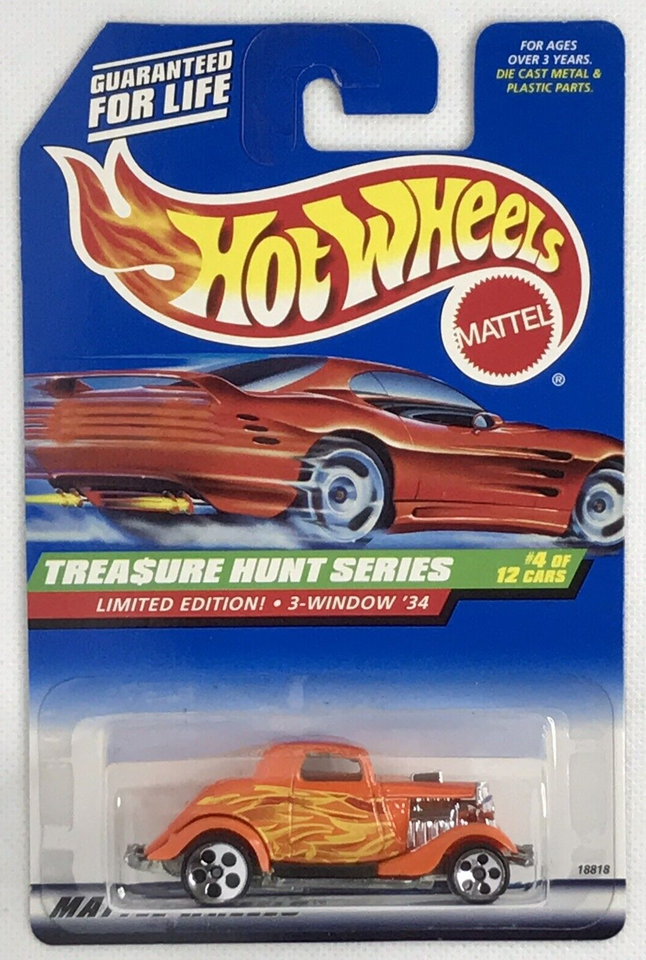
There is no single Treasure Hunt shortcut that works for every year.
Mattel’s own history notes that twelve Treasure Hunt cars were released in 1995, while later years added Super Treasure Hunts and changed the program. A buyer should identify the exact year, casting and release before relying on a stripe, symbol, paint finish or wheel style.
This is a release-specific buying workflow—not an “eight rarest ever” ranking or a promise that any Treasure Hunt will rise in value.
Identify the exact dated release
- Name the casting and year.
- Determine whether the claim is a regular Treasure Hunt or a Super.
- Match body finish, graphics, wheels, markings and package to that release.
- Check the actual item for changes, damage or resealing.
- Save the reference used and any unanswered questions.
Do not decide from rubber tires alone. Aftermarket wheel swaps can use rubber tires, and ordinary releases can share a casting with a Super. Likewise, one circle-and-flame graphic is not a universal stand-alone test outside its full release context.
Compare two late-1990s carded releases


These cars come from adjacent years, but their casting, graphics, collector numbers and package evidence are different. Check the card and blister condition separately from the vehicle. A creased card, cracked blister or suspected reseal affects the individual offer even when the release identity is correct.
Use loose-car evidence differently
A loose car has no original card to support the identification, so photograph both sides, roof, base, wheel hubs and symbols. Ask about replacement axles, wheels, repainting and restoration. “Loose” does not mean fake or worthless; it means packaging evidence is unavailable and condition comparison must use other loose examples.
The clear Stockar below is identified in its current record as a 2014 Treasure Hunt, including a circle-flame symbol on the rear quarter panels. That same record discloses scratches, clouding and graphic wear. Release identity and condition must both enter the buying decision.

Check a modern Super as a complete package
A modern Super should match the documented casting, year, graphics, finish, Real Riders wheel configuration and card. Spectraflame-style paint or a wheel swap on a regular version does not create a factory Super. Compare the exact release, not a generic photo.
When a seller claims an especially scarce error, prototype or regional version, request photographs of the feature and provenance that supports it. Expensive purchases deserve an independent specialist opinion rather than confidence borrowed from a headline.
Research market evidence without turning it into a guarantee
Compare completed transactions for the same year, casting, release, package status, originality and condition. Record dates, lot contents, currency, shipping and buyer fees. Active asking prices are not sales, and an undisclosed accepted offer does not reveal the final amount.
Case ratios, distribution stories and anecdotal “one per case” rules should not substitute for the exact item evidence. Even a verified limited or chase release can have changing demand.
Buy the release you can identify.
Start with the year-specific details, inspect originality and condition, then compare matching sold evidence. That method supports a collection better than any permanent rarest-ever ranking.
Compare one carded offer with one loose offer correctly
The carded 1998 3-Window ’34 and loose clear Stockar are different collecting offers. The Ford’s two current photographs document the included card and blister. The Stockar’s three photographs show one unpackaged car, and its description discloses scratches, clouding and graphic wear. Both need release identification, but the condition evidence and contents differ.
| Check | Carded Ford | Loose Stockar |
|---|---|---|
| Identity | 1998 series #4/12, collector #752 | Listed 2014 Treasure Hunt configuration |
| Included package | Documented card and blister | No retail packaging |
| Condition focus | Vehicle plus card, blister and attachment area | Body clarity, graphics, wheel finish and visible wear |
| Sales comparison | Similar carded release and package condition | Similar loose release and vehicle condition |
A premium for packaging should be researched rather than assumed, and a missing card does not turn a genuine loose release into a fake. Keep the two formats in separate comparison groups. If a listing’s photos are representative rather than exact-unit images, request the current item’s condition before treating it as a match. Your buying record should name the particular offer, not merely “Treasure Hunt.”

