

Matchbox
Matchbox vs. Maisto: Compare Scale, Finished Cars & Assembly Kits
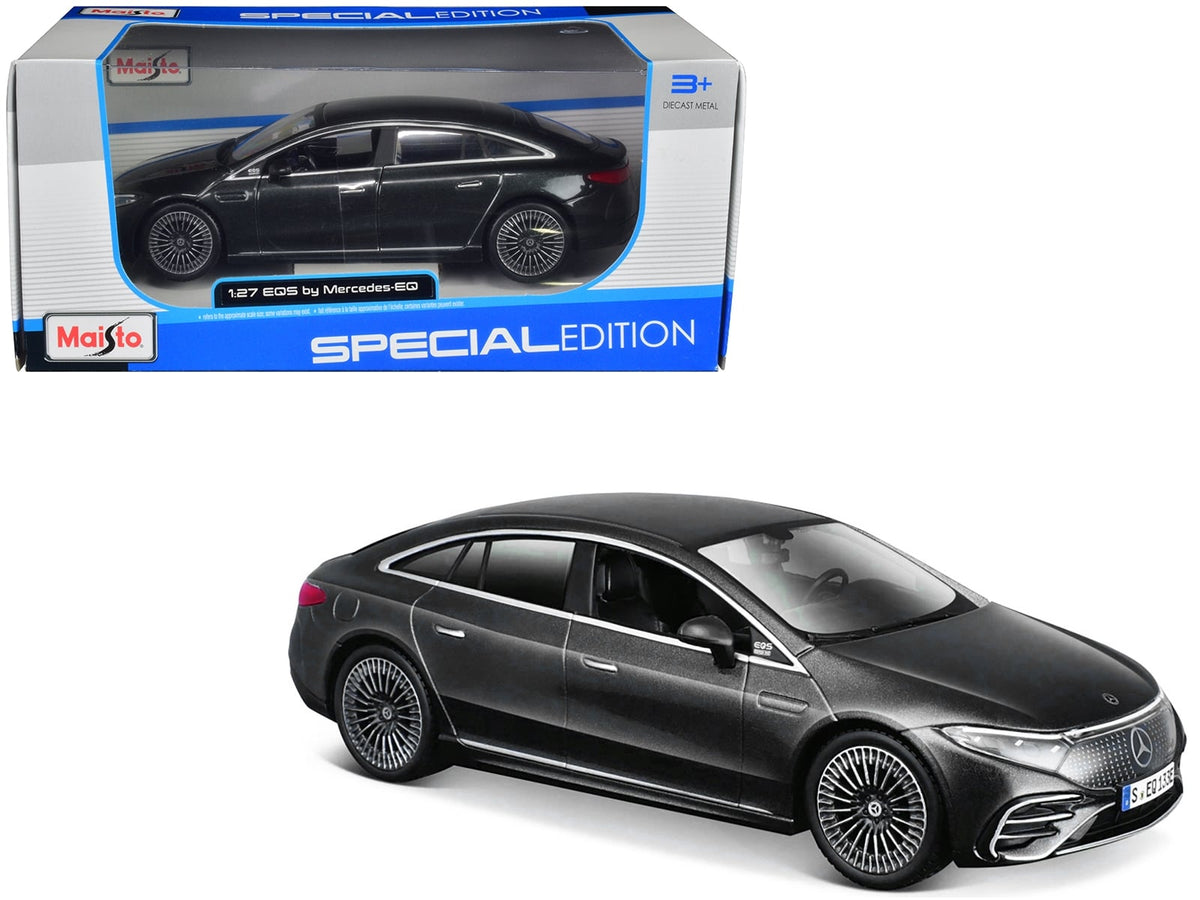
Compare Matchbox and Maisto at the product level: subject, scale, condition and whether assembly is required. A small vintage Matchbox and a larger Maisto replica answer different collecting goals. Treating both brands as one uniform 1:64 category hides the information a buyer needs.
Start with actual catalog examples
The Maisto Mercedes-Benz EQS in gray metallic is listed in 1:27 scale. The header photograph comes from that product listing.
The yellow Maisto 2017 Chevrolet Camaro ZL1 is listed in 1:24. Meanwhile, the green 2023 Toyota Tacoma TRD Pro is a 1:27 diecast assembly kit, not the same purchase format as a finished model.
These examples identify individual offers. Their current product pages supply price, availability, contents and photographs; they do not establish specifications for every Maisto product.
Decide whether you want a model or a project
A finished replica suits someone who wants to unpack and display it. A kit suits someone who enjoys assembly and has the appropriate skills and workspace. Read the included-parts and tool information rather than assuming every product in a picture arrives fully built.
For an older Matchbox, condition and completeness are central. The No.32 Leyland BP tanker is an individually described vintage offer, not a new assembly kit.
Measure the space the model will occupy
Use the product's stated scale and actual dimensions. For the same real vehicle, a 1:24 model would be larger than a 1:27 model; different real vehicles still need their own measurements.
Include display bases and projecting parts when checking shelf depth or a case. A nominal scale does not guarantee every van, truck and sports car will fit the same compartment.
Compare detail with a fair reference
Use the same subject and body version when judging proportions. Compare visible glazing, interior, wheels and decoration in equivalent photographs. Do not assign one brand a permanent realism advantage without examining the actual models.
Check operating features against each product's description. A visible panel gap does not prove a door or hood opens, and a mechanism on one edition should not be promised on another.
Keep condition separate from design
A playworn vintage car and an unused modern replica are not equivalent condition samples. Record chips, missing pieces, restoration and packaging before deciding how each offer fits your collection.
Likewise, an aftermarket wheel swap should be compared as a modification rather than attributed to the factory. The scale and diorama guide helps plan a mixed-brand display.
Choose the offer that fits the goal
Pick the vehicle, scale and format first, then compare the complete delivered price. A well-described finished replica, a deliberate kit project and a documented vintage model can each be the right purchase without declaring an entire brand the winner.
Compare the job before the badge
Make three columns: display-ready model, assembly project and vintage collectible. Put the exact offer into one column before scoring detail or price. The listed Tacoma kit requires assembly; the loose Lesney tanker needs a condition assessment. Those differences remain important even when two vehicles would look good on the same shelf.
For a mixed purchase, allocate space before ordering. Measure the proposed compartment and the model’s complete footprint, then leave room for retrieval. A larger nominal scale can improve visibility from across a room while a small loose car suits a compact grouping. Neither advantage proves one manufacturer is universally more accurate.
Photographs for the comparison


