Why collecting Hot Wheels & Matchbox is more than a hobby—it’s culture.

Hot Wheels and Matchbox cars are more than miniature die-cast vehicles. They are cultural artifacts, storytelling devices, and nostalgic anchors that connect generations. For many, the first Hot Wheels car was a gift from a parent or grandparent, sparking a lifelong passion. For others, Matchbox cars were the pocket-sized companions of childhood adventures. Today, collecting these cars is not just about amassing toys—it’s about preserving history, celebrating design, and participating in a global community.
Collectors often describe their shelves as museums of memory. Each car represents a moment in time: the design trends of the 1970s, the marketing innovations of the 1990s, or the pop culture tie-ins of the 2000s. The act of collecting transforms these small vehicles into cultural touchstones. They embody craftsmanship, creativity, and the thrill of the hunt. In short, collecting Hot Wheels and Matchbox cars is not simply a pastime—it’s a lifestyle and a culture that continues to evolve.
History: Key Eras
Redlines (1968–1977)
The Redline era marked the birth of Hot Wheels. Named for the distinctive red stripe on the tires, these cars were revolutionary in design and performance. With their “Spectraflame” paint and fast-rolling wheels, Redlines captured the imagination of children and collectors alike. Today, Redlines are among the most sought-after cars, with pristine examples commanding thousands of dollars.
Blackwalls (1977–1995)
As Hot Wheels transitioned into the Blackwall era, the red stripe disappeared, but the creativity remained. This period introduced iconic castings like the ’57 Chevy and the Ferrari Testarossa. Blackwalls are often more affordable than Redlines, making them accessible entry points for new collectors. However, rare variations and mint-condition examples can still fetch impressive prices.
Treasure Hunts (1995–present)
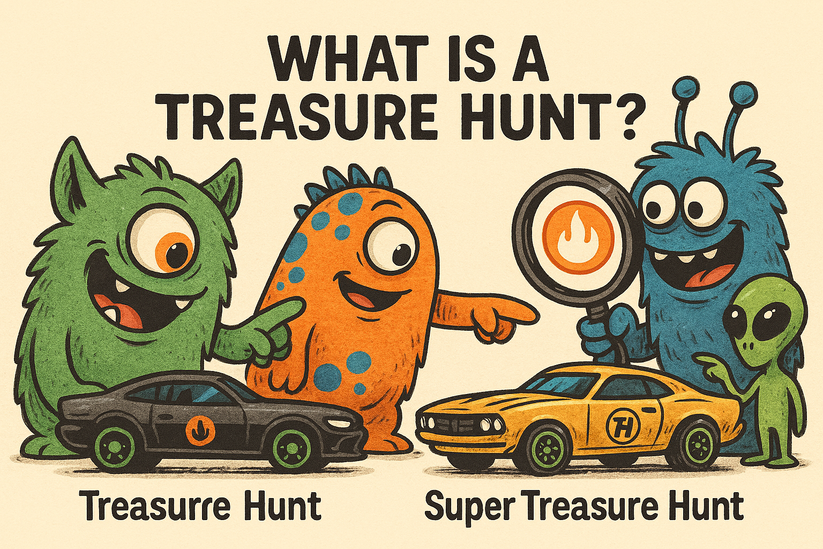
In 1995, Hot Wheels introduced Treasure Hunts—limited-run cars hidden in assortments. These instantly became collector favorites, sparking a modern frenzy. Early Treasure Hunts featured unique packaging and paint schemes, while later “Super Treasure Hunts” added premium wheels and finishes. The thrill of finding a Treasure Hunt in a store remains one of the most exciting experiences for collectors.
Matchbox Superfast (1969–1982)
Matchbox responded to Hot Wheels with the Superfast line, featuring faster wheels and vibrant designs. Superfast cars bridged the gap between traditional Matchbox realism and Hot Wheels’ flashy style. Collectors prize early Superfast models for their unique charm and historical significance.

Rarity & Value
Determining rarity and value is both art and science. Collectors must consider multiple factors:
- Paint Variations: Unusual colors, factory errors, or limited runs can dramatically increase value.
- Packaging: Original blister packs or boxes add significant worth, especially if unopened.
- Grading: Professional grading services rate cars from Mint to Poor, impacting price ranges.
- Production Numbers: Limited production runs are inherently more valuable.
Values range widely. Common castings may sell for a few dollars, while rare Redlines or Treasure Hunts can reach thousands. For example, the 1969 Pink Rear-Loading Beach Bomb is considered the holy grail, valued at tens of thousands of dollars. Understanding rarity helps collectors make informed decisions and avoid overpaying.